


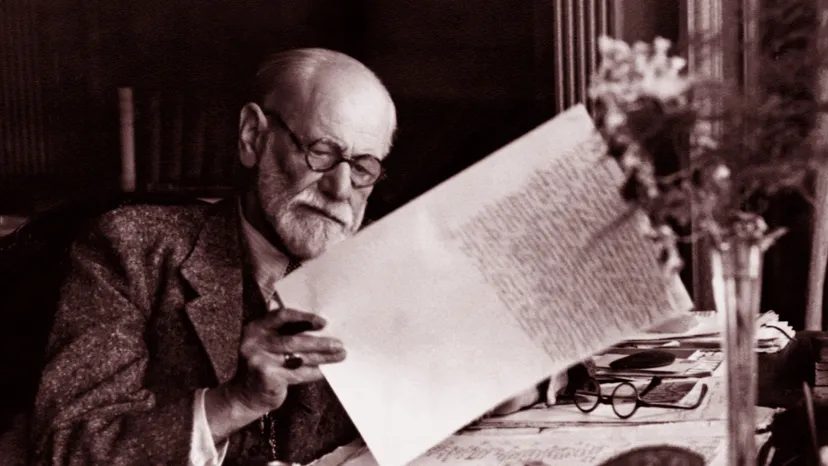
Sigmund Freud was treated like a prophet before. Today, he is often dismissed as a fraud.
It’s a stark turn for the man who gave us the id, the ego and a superego. He also gave us penis envy and the Oedipus complex. By the end of the 20th century, science had developed. Critics pointed out that most of his specific ideas were factually incorrect. The evidence did not support it.
However, Freud remains a titan of history. Not because of his diagnostic errors. But because he changed our view of the human mind.
He questioned the dominant view of his time: positivism. Positivism claimed that knowledge only comes from logic and reason. It implied that we have full control over our actions and the world. Freud said it was impossible. He suggested that we are not clear about everything we think. Much of what drives us happens beneath the surface.
This shift towards an understanding of unconscious mind is his real contribution. It changed psychology forever.
From the laboratory to a private practice
Freud’s path to this idea was chaotic. He was born in Freiberg, Moravia in 1856. It was part of the Austro-Hungarian Empire. His family was Jewish. Soon they moved to Vienna.
In 1873, he began his medical studies at the University of Vienna.
Here’s the twist: he didn’t want to be a doctor.
He was obsessed with neurophysiological research. He wanted to study the brain directly. But in the 1870s funding for research was difficult. Studying medicine was the only practical way to survive. He also had a fiancée named Martha Bernays. Practicality won. He preferred medicine to pure science.
He specialized in neurology. He started at a private practice.
Sigmund and Martha were married in 1886. Between 1887 and 1895 they had six children. There was a lot of activity in the household. The work was more difficult.
Dealing with “incurables”.
After graduating, Freud worked with Josef Breuer. Breuer was a respected Austrian physician. Together they treated patients labeled Hysteria.
The term then meant something special. It wasn’t just emotional instability. It was a diagnosis of physical symptoms without a physical cause.
Most of the patients were women. Their bodies failed them in a strange way.
Paralysis. convulsions. Loss of speech.
There was no broken bone. No tumor. No infection. But the body reacts as if it were.
Freud opened his own practice focusing on these nervous disorders. He looked for answers where medicine didn’t have them. He wanted to know why the mind would destroy the body.
The answers he found would reshape Western thinking.


