

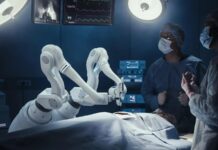



For decades, medicine has operated with a clear hierarchy. Specialists who perform procedures—surgeons, cardiologists, neurologists—have traditionally held greater prestige and commanded higher salaries than those focused on diagnosis and long-term care. But this dynamic is poised for a radical shift. The convergence of generative artificial intelligence (AI) and surgical robotics is not just improving operations; it’s fundamentally altering how they’re performed, and in doing so, it’s set to reshape the balance of power within the medical profession.
The Evolution of Surgical Expertise
Historically, diagnostic prowess reigned supreme in medicine. However, the advent of advanced imaging (CT scans, MRIs) and minimally invasive surgical tools flipped this equation. Interventional specialties rose to prominence as procedures became faster, more precise, and less invasive. This led to a surge in demand for these skills, driving up compensation and attracting the most competitive trainees.
Now, a new inflection point has arrived. Generative AI, the technology behind tools like ChatGPT, has evolved far beyond simple text prediction. These large language models (LLMs) are capable of sophisticated reasoning, detailed planning, and expert-level summarization. Trained on vast datasets of medical textbooks, surgical videos, and clinical conversations, they can now mimic human problem-solving with increasing accuracy.
How AI-Powered Robots Will Operate
The idea of a robot performing surgery autonomously—without human guidance—once seemed like science fiction. But the rapid progress in AI is making it a near-term reality. Current surgical robots, already allowing surgeons to work through smaller incisions with enhanced precision, are the missing link.
The process is straightforward: AI systems analyze real surgical footage, matching visual data to the precise hand movements of expert surgeons. After training on thousands of procedures, the AI learns to reproduce these stimulus-response patterns, effectively replicating surgical expertise. This approach mirrors the training of self-driving cars, but with a critical advantage: the operating room is a controlled environment, and human anatomy is far more predictable than city streets.
Regulatory Approval and Safety
Before widespread implementation, rigorous testing will be required. Regulatory bodies like the FDA will compare outcomes of AI-directed procedures with those performed by human surgeons, using blinded reviews to ensure impartiality. Only when AI performance matches or exceeds human standards will approval be granted. Elon Musk’s prediction that Tesla’s humanoid robots could perform “sophisticated medical procedures” underscores the accelerating pace of this development.
Preparing for the Future of Surgery
The building blocks for autonomous robotic surgery already exist. The timeline—five to ten years—depends less on technological breakthroughs and more on collaboration between hospitals, surgeons, and tech companies. Three key changes are needed to prepare for this future:
- Residency Training Reform: Medical schools must rebalance their programs, reducing the number of surgical trainees and expanding primary care residency spots. The shift toward AI-assisted (and eventually autonomous) surgery will increase efficiency, allowing surgeons to function more as supervisors than manual laborers.
- Payment Model Updates: The U.S. healthcare system’s fee-for-service model incentivizes volume over outcomes. Shifting to bundled payments—single rates covering all surgical costs—would promote efficiency, safety, and innovation. This restructuring could also fund higher salaries for primary care physicians, whose role in preventative medicine will become even more critical.
- Cultural Evolution: Clinicians have historically resisted technologies that threaten their autonomy or income. However, economic pressures and the promise of safer, more consistent outcomes will drive adoption. Underserved communities, lacking specialty expertise, are likely to lead the way, followed by broader implementation as trust grows.
The transition won’t be seamless. Patients will initially hesitate, but as AI-driven surgery proves reliable—much like the acceptance of ATMs—concerns will diminish. Ultimately, the lines between cognitive and procedural specialties will blur, as AI empowers both diagnosis and treatment with unprecedented precision.
The future of surgery isn’t about replacing doctors; it’s about augmenting their capabilities, improving patient outcomes, and reshaping the very structure of the medical profession.