


Baltimore. Mid-May. The air smells like tobacco and hot asphalt. This is the Preakness Stakes. The second leg of the Triple Crown. The shortest, the coldest.
Three-year-old Thoroughbreds sprint 13/16 of a mile at Pimlico Race Course. It’s a brutal distance. Too short to test stamina, too long to be a sprint. The weights tell the story. Fillies carry 121 pounds. Colts take 126. A half-pound difference that matters when you’re pushing 40 miles per hour.
The 2025 edition didn’t disappoint. Journalism, ridden by Umberto Rispoli, took the wire. Gosger finished second. Sandman hung on for third. The “Run for the Black-Eyed Susans” belongs to Journalism again this year.
Why Pimlico? A Turbulent History
You think Pimlico is sacred ground? It wasn’t always.
The race started in 1873. Named after a horse that won the Dinner Party Stakes at the track in 1870. Simple enough. But the Preakness has moved around more than a rental car.
It left Pimlico in 1889. Ran at Morris Park in Westchester County, New York, in 1890. Then? Three years of silence. Nothing.
It returned in 1894. But not to Maryland. Gravesend in Brooklyn held the reins until 1908. Finally, the race came home. Settled at Pimlico for good. A century of stability in a sport defined by chaos.
Traditions That Stick
The Kentucky Derby has the roses. The Preakness has the black-eyed Susan.
Wait. Black-eyed Susans bloom in June or July. The race happens in May. Nature doesn’t care about your schedule. So they use yellow daisies. Hand-painted centers. Black lacquer. Fake flowers for a real tradition.
The draping of the winning horse with a blanket of “black-eyed Susans” is the Preakness’ most visible ritual.
Before the race, they sing “Maryland, My Maryland.” State song. Loud. Aggressive. Fitting for a race that starts fast and ends faster.
Then there’s the painting of the colours. Right after the winner is announced. A painter climbs a ladder. Reaches the replica Old Clubhouse. Applies the silks to the cupola’s jockey-and-horse weather vane. It’s theatrical. It’s messy. It’s perfect.
The Triple Crown Context
The Preakness is the middle child. The Kentucky Derby breaks the hearts. The Belmont Stakes breaks the legs. The Preakness? It breaks the rhythm.
Two weeks after the Derby. Three weeks after the Belmont used to be. The schedule is compressed. Horses are fresh or fried. There’s no in-between.
Gosger and Sandman tried to catch Journalism in 2025. They didn’t. Rispoli knew the pace. The horse knew the track. Pimlico’s dirt is unique. Tight turns. Quick straightaways.
A Century of Winners at Pimlico
The history of the Preakness Stakes is written in ink and sweat, stretching back to 1873. It isn’t just a list of names. It’s a timeline of American thoroughbred racing, marked by gaps, quirks, and moments that defined the sport. The Preakness Stakes winners table tells the story, but the footnotes explain the chaos. Between 1891 and 1893, there was no competition. Three years vanished. Then in 1918, the track split. Two divisions. Two winners. War Cloud and Jack Hare, Jr. shared the glory because the number of starters got out of hand. You don’t see that kind of logistical nightmare often.
Most years are cleaner.
Take the early days. Survivor won in 1873, ridden by G. Barbee. The pattern sets quickly. G. Barbee wins again in 1876 with Shirley. Then in 1883, he takes Jacobus. Barbee wasn’t just a rider; he was a fixture. L. Hughes appears in the saddle for Tom Ochiltree in 1875, Harold in 1879, and Grenada in 1880. He’s building a legacy before the term even existed in its modern form. C. Holloway follows a similar arc, taking Cloverbrook in 1877 and Duke of Magenta in 1878. These weren’t one-hit wonders. They were professionals who knew Pimlico’s dirt like the back of their hand.
The Legends Ride Here
Then the names shift. You start seeing titans.
1919 brings Sir Barton. J. Loftus was in the irons. But look at 1920. Man o’ War. Charles Kummer. That’s not just a win. That’s a statement. Man o’ War didn’t just run; he obliterated the field. The Preakness Stakes has hosted the greatest, and 1920 is the anchor.
Fast forward a few decades. The Arcaro era begins. Eddie Arcaro isn’t just riding; he’s conquering. He takes Mate in 1931. Then Burgoo King in 1932. Then Count Fleet in 1943. He’s back for Pensive in 1944. And again for Citation in 1948. Hill Prince in 1950. Bold in 1951. Hasty Road in 1954. Fabius in 1956. Arcaro wins seven times in this span. Seven. That’s more than most jockeys see in a lifetime. It’s a dominance that feels almost unfair.
Arcaro’s seven victories in the Preakness Stakes remain a record that stands as a testament to his skill and consistency.
But it’s not just about the number of wins. It’s about the speed.
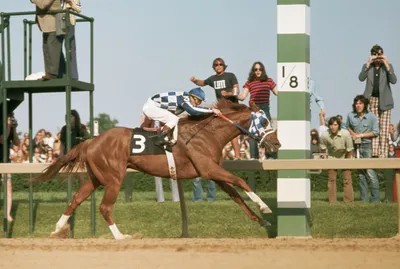
In 1973, Secretariat won. Ridden by Ron Turcotte. The time was 1 minute and 53 seconds. The footnote marks it as the fastest time in the race’s history. It’s a number that haunts every subsequent runner. Secretariat didn’t just win the Preakness. He rewrote the clock. Turcotte also won in 1965 with Tom Rolfe. He rode the legend that changed how we view speed in horse racing.
The Modern Era and Recent Champions
The mid-century to late-century stretch is a mix of familiar names and new stars. Bill Shoemaker takes Candy Spots in 1963 and Damascus in 1967. He’s battling Arcaro for the crown of jockeying greatness. Laffit Pincay Jr. isn’t on this specific list yet, but Shoemaker is holding down the fort for a long time.
Then the 1980s hit. Alysheba in 1987 with Chris McCarron. Risen Star in 1988 with Eddie Delahoussaye. Sunday Silence in 1989 with Pat Valenzuela. Sunday Silence was a cultural shift. A Japanese-bred horse taking on the American establishment and winning. The Preakness Stakes was no longer just for the homegrown heroes. It was becoming international.
The 1990s bring a cluster of wins for Pat Day. Summer Squall in 1990. Tabasco Cat in 1994. Timber Country in 1995. Louis Quatorze in 1996. Day wasn’t just winning; he was dominating the track in a way that mirrored Arcaro’s era. Four wins in seven years. That’s precision.
Then the turn of the millennium. Silver Charm in 1997. Real Quiet in 1998. Charismatic in 1999. Three horses in three years chasing the Triple Crown and falling short at the final hurdle, but winning the Preakness each time. It’s a heartbreak narrative that plays out repeatedly. The Preakness is the middle child of the Triple Crown, often overshadowed by the Kentucky Derby and Belmont, but these wins were massive.
2004 brings Smarty Jones. Steve Elliott. The hype was electric. 2005: Afleet Alex. 2006: Bernardini. John Velazquez isn’t on this list for the Preakness wins yet, but the talent is rising. 2007: Curlin. 2008: Big Brown. 2009: Rachel Alexandra. The first filly in over a century to win. Corey Borel. It changed the conversation. You couldn’t ignore female thoroughbreds anymore.
The Last Decade of Winners
Look at the recent years. The names are sharper, the races tighter.
2014: California Chrome. Victor Espinoza. 2015: American Pharoah. Espinoza again. He’s riding history. Pharoah breaks the drought. The Triple Crown returns. It’s a moment that stops the clock for fans.
2018: Justify. Max Hirsch isn’t the jockey here; it’s Mike Smith. Justify goes on to win the Triple Crown too. Smith is back in the winners’ circle for one of the most dominant performances in recent memory.
2019: War of Will. Tyler Gaffalione. A longshot story. The Preakness isn’t just for the favorites.
2020: Swiss Skydiver. Rafael Bejarano. The second filly to win. It’s a pattern now. The race is opening up.
2021: Rombauer. Flavien Prat. 2022: Early Voting. John Ortiz. 2023: National Treasure. Jose Ortiz. 2024: Seize the Grey. Javier Castellano. And now, 2025: Journalism. Umberto Rispoli. And 2026: Napoleon Solo. Pedro Lopez.
The list continues. It doesn’t stop.
Each name represents a specific day at Pimlico. A specific moment where time seemed to stretch. The Preakness Stakes winners list is a record of excellence. It’s also


