



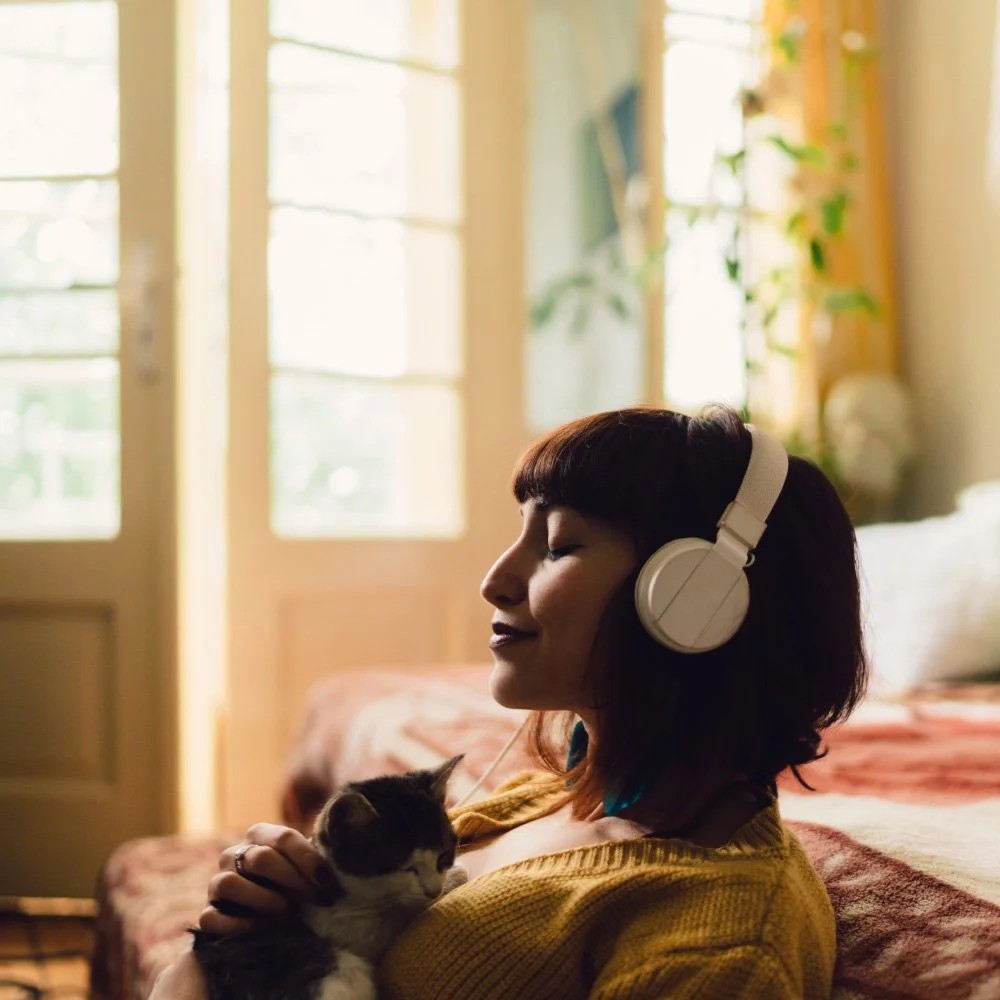
If you have scrolled through social media or browsed streaming platforms recently, you have likely encountered playlists labeled 432 Hz. These tracks are often marketed as “healing,” “grounding,” or even “transformative.” Proponents claim that music tuned to this specific frequency aligns with the natural rhythms of the universe, offering benefits ranging from reduced anxiety to improved sleep.
But what is 432 Hz, and is there any truth to these claims?
In short, 432 Hz is a musical tuning standard—specifically, the pitch at which the note A above middle C is set. The more common standard is 440 Hz. While the debate between the two is intense in wellness circles, the reality is nuanced. There is no scientific evidence that 432 Hz possesses magical healing properties. However, many listeners do report feeling more relaxed when listening to music tuned this way. This suggests that the benefits may stem from personal preference, the placebo effect, or simply the stylistic choices of artists who choose softer, slower compositions for these frequencies.
Here is a clear breakdown of the facts, the myths, and what this means for your relaxation routine.
What Is 432 Hz vs. 440 Hz?
To understand the debate, you must first understand musical tuning. For centuries, there was no universal standard for pitch. Instruments in different cities or countries were tuned to slightly different frequencies, making collaboration difficult.
In the mid-20th century, 440 Hz became the international standard. This ensured that a violin in London sounded the same as a piano in New York. It is the baseline for most modern music, from pop hits to classical recordings.
432 Hz is 8 hertz lower than 440 Hz. To the untrained ear, the difference is subtle—a slight drop in pitch that many might not notice at all. However, advocates argue that this lower pitch creates a warmer, softer, and more “natural” sound.
Key Context: The preference for 432 Hz is largely cultural and subjective. Some musicians and listeners find the slightly lower pitch less harsh on the ears, particularly in acoustic settings. Others argue that 440 Hz is brighter and more energetic. Neither is objectively “better”; they are simply different aesthetic choices.
The Claimed Benefits: Anecdote vs. Evidence
Proponents of 432 Hz music list several health and wellness benefits. It is important to distinguish between what people report experiencing and what science proves.
1. Stress Reduction and Cortisol Levels
- The Claim: Listening to 432 Hz music lowers cortisol (the stress hormone), leading to immediate relaxation.
- The Reality: Music in general has been proven to reduce stress and lower heart rate. Some small studies suggest that specific frequencies may enhance this effect, but the evidence is not conclusive. It is likely that the style of music associated with 432 Hz (often slow, ambient, or classical) is what drives the relaxation, not the frequency itself.
2. Improved Sleep Quality
- The Claim: 432 Hz music helps you fall asleep faster and sleep more deeply.
- The Reality: Slow-tempo music is a well-documented aid for sleep. If 432 Hz playlists tend to feature slower tempos and fewer sharp transitions, they may indeed be better for sleep than high-energy 440 Hz pop or rock. However, a 440 Hz lullaby could be just as effective.
3. Mental Clarity and Focus
- The Claim: This frequency enhances concentration and mental clarity.
- The Reality: This is highly individual. Some people find lower pitches calming enough to focus, while others find them dull or distracting. For many, the key to focus is consistency and lack of lyrical distraction, regardless of tuning.
4. Physical Healing and Pain Relief
- The Claim: 432 Hz vibrations promote cellular healing and reduce pain.
- The Reality: There is no scientific evidence to support the idea that sound frequencies can directly heal cells or cure physical ailments. While music therapy can help manage pain perception by distracting the brain or reducing anxiety, the specific frequency of 432 Hz is not a medical treatment.
Why Do Some People Prefer 432 Hz?
If the scientific evidence is thin, why does 432 Hz remain popular? Several factors contribute to its appeal:
- The Placebo Effect: Believing that something will help you relax can actually make it work. If you expect 432 Hz music to be calming, your brain may respond by lowering your stress levels.
- Aesthetic Preference: Many listeners simply prefer the “warmer” sound of the lower pitch. It can feel less aggressive and more intimate.
- Association with Wellness: Because 432 Hz is heavily marketed in yoga, meditation, and mindfulness communities, it has become a symbol of tranquility. Listening to it can trigger a conditioned response of calmness.
How to Use 432 Hz Music Effectively
If you are curious about 432 Hz music, here is how to approach it practically:
- Treat It as a Tool, Not a Cure: Use 432 Hz music as a backdrop for meditation, reading, or winding down. Do not rely on it to treat medical conditions.
- Experiment: Try listening to the same piece of music tuned to both 440 Hz and 432 Hz. See which one you prefer. Your personal taste is the most important factor.
- Focus on Genre: Genres like classical, ambient, acoustic, and jazz often benefit from the softer tone of 432 Hz. High-energy genres like EDM or heavy metal rarely use this tuning, as it can feel “off” or muddy in fast-paced contexts.
- Mind Your Expectations: Approach the music with an open mind. If you find it relaxing, great. If you don’t notice a difference, that is normal too.
Frequently Asked Questions
Q: Can I convert my own music to 432 Hz?
A: Yes. Most digital audio workstations (DAWs) and audio editing software allow you to change the pitch. To convert from 440 Hz to 432 Hz, you need to lower the pitch by approximately -31.8 cents (one cent is 1/100th of a semitone). Note that this may slightly alter the tempo if time-stretching is not used.
Q: Did ancient civilizations use 432 Hz?
A: This is a popular myth. Historical records show that tuning standards varied widely across time and place, with no consistent evidence that ancient Greeks, Egyptians, or other cultures specifically preferred 432 Hz. The standardization of pitch is a modern phenomenon.
Q: Is 432 Hz “more natural” than 440 Hz?
A: Not necessarily. Nature does not have a single “standard” frequency. Sounds in nature vary widely. The idea that 432 Hz aligns with the “frequency of the universe” is a metaphorical or spiritual concept, not a scientific one.
Conclusion
The debate over 432 Hz vs. 440 Hz is ultimately about personal preference and aesthetic choice, not scientific superiority. While there is no evidence that 432 Hz music heals the body or unlocks hidden spiritual powers, it can be a valuable tool for relaxation, meditation, and sleep—if you find it soothing.
Music’s power lies in its ability to evoke emotion and create atmosphere. Whether tuned to 432 Hz, 440 Hz, or any other frequency, the best music for you is the music that helps you feel calm, focused, or uplifted. Listen to what resonates with you, not just what the internet says you should prefer.