


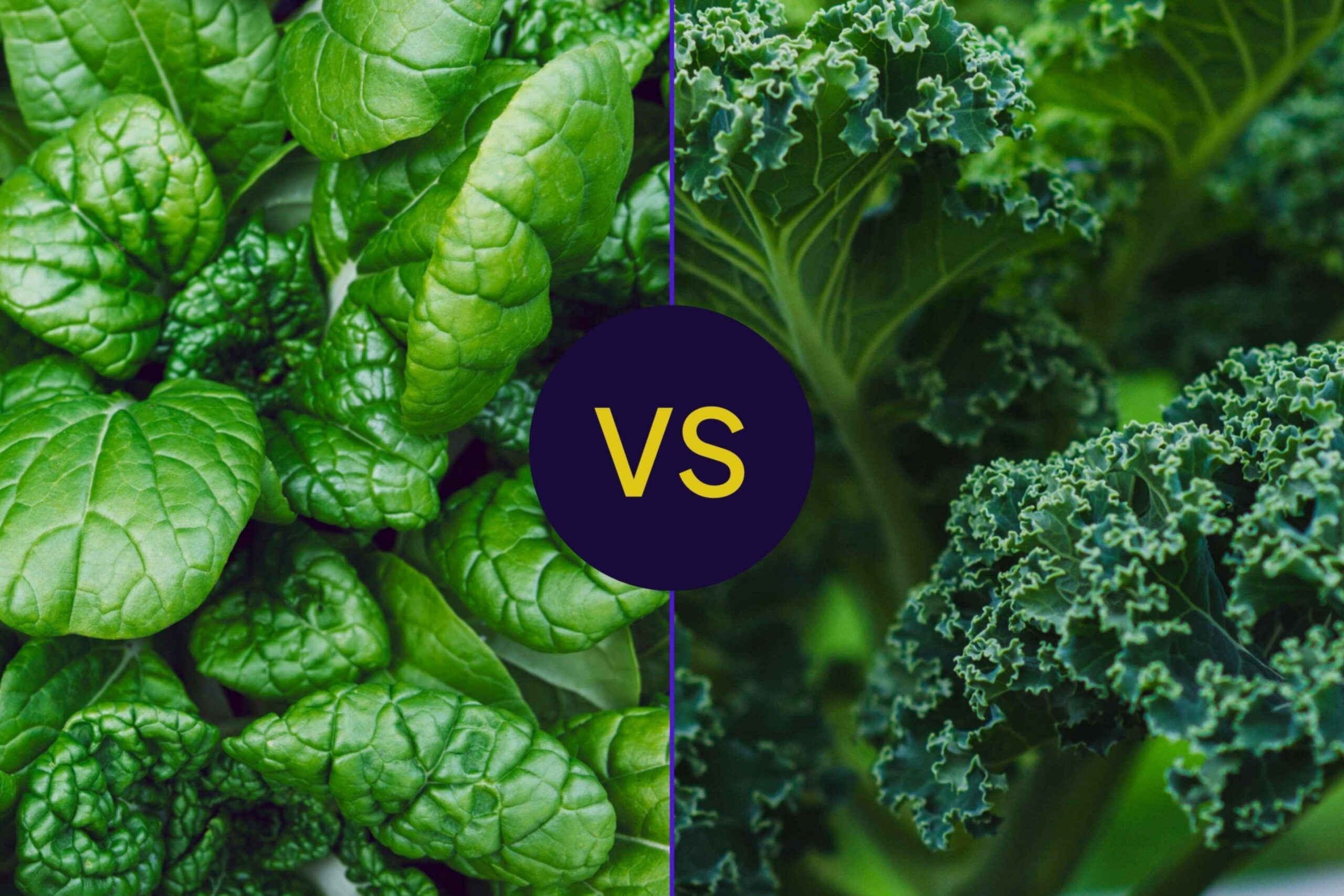
Let’s cut through the noise. You probably see them everywhere. Farmers markets, grocery store displays, maybe even your own wilting fridge drawer. Spinach and kale. The heavyweight champions of the leafy green world.
Everyone calls them superfoods. But does the label mean anything when you’re actually standing in the aisle wondering which one to buy?
Here is the short answer: it depends on what your body needs. Spinach vs. kale nutrition is a close fight. Spinach packs more vitamins and minerals. Kale wins on fiber and Vitamin C. But there is a catch. A big one regarding how your body actually absorbs what you eat.
Why Spinach Wins on Micronutrients
If you are looking at a raw nutrient density chart, spinach looks like a monster. It isn’t just a leaf. It is a biological powerhouse.
For most vitamins and minerals, spinach beats kale. Hard.
Take Vitamin A. You need it for vision. For immune function. For keeping your brain working right. Spinach has more. It also has higher levels of Vitamin E, Vitamin K, folate, iron, magnesium, and potassium.
Potassium and magnesium matter. They help regulate blood pressure. And here is where it gets interesting. Spinach is loaded with nitrates. These aren’t the bad kind you worry about in processed meats. These plant-based nitrates help relax blood vessels. That means better blood flow. Lower blood pressure.
A 2021 review backed this up. Eating more green leafy veggies like spinach was linked to a 7% lower risk of cardiovascular events. We are talking strokes. Heart disease.
Spinach also holds the title for lutein and zeaxanthin levels. These are carotenoids. Plant pigments that act like sunglasses for your cells. They protect your eyes from cellular damage.
So if you want the highest concentration of specific vitamins and minerals? Spinach is your friend.
Why Kale Might Actually Be Better For You
Wait. Did I say spinach is the best? Let’s complicate things.
Kale isn’t losing by a landslide. It is winning in areas that spinach neglects.
First. Fiber. Kale has 67% more fiber than cooked spinach. Do not underestimate fiber. It keeps your digestion moving. It helps regulate blood sugar. It protects your heart. Spinach is great, but kale is a digestive workhorse.
Then there is Vitamin C. An antioxidant. An immune system booster. Kale has more of it. If you are trying to prevent a cold or protect cells from oxidative stress, kale edges ahead here.
But the real issue with spinach is calcium.
On paper, spinach has calcium. In reality, you might not absorb it. Spinach is high in oxalates. These are anti-nutrients. They bind to minerals like calcium. They lock it up. Your body can’t use it. It just passes through.
Kale is low in oxalates. This makes its calcium bioavailable. You eat it. Your bones use it. For someone worried about osteoporosis or just wanting dense bones, kale is the superior source of calcium despite having slightly less raw calcium content.
“Kale is a better source of calcium than spinach due to bioavailability, not just raw numbers.”
Which Leafy Green Should You Actually Eat?
Are you trying to decide which green leafy vegetable is healthier for your specific diet?
Stop trying to find a single winner. The question is the wrong one.
Both spinach and kale lower the risk of cognitive decline. Both fight cancer risk. Both support heart health. The 2021 study didn’t split hairs between the two for cardiovascular benefits. It lumped them together as “green leafy vegetables.”
So why choose one?
Maybe you have sensitive digestion. High oxalates can cause issues for some people. Go with kale.
Maybe you are watching your potassium intake. Spinach is higher. Check with your doctor.
Maybe you just like the taste of one more than the other. That counts. If you hate kale, you won’t eat it. If you won’t eat it, the nutrients don’t matter.
Eating green vegetables is the goal. Not the perfect green vegetable.
Add spinach to your smoothies. Throw kale on your salad. Cook them both. They are cheap. They are accessible. They are loaded with carotenoids and antioxidants.
The only real mistake is not eating them at all.
What are you putting in your bowl tonight?


