



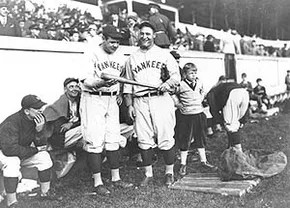
The 1927 barnstorming tours gave New York fans a glimpse of baseball royalty, but behind the scenes, the dynamic between the Yankees’ two biggest stars was fracturing. Lou Gehrig started as a worshiper. The young first baseman sat at the feet of Babe Ruth, absorbing every move of the Bambino. Time changed that. Gehrig grew up. He stopped bowing and started standing his ground.
The pipe-smoking, Ivy League-educated Gehrig clashed with the ebullient, cigar-chomping Ruth. These verbal spats weren’t loud or dramatic in the dugout, but they existed. On the field, they kept up appearances. They were cordial. Sometimes even friendly. That iconic shot of Gehrig’s face after Ruth’s “called shot” home run in the 1932 World Series shows pure, childish delight. But their lifestyles diverged too much to sustain a real bond.
It took a family incident to burn the bridge completely. The kids played together for a while. Then Gehrig’s mother made a snide comment. She noted that Dorothy, Ruth’s adopted daughter, wasn’t dressed as nicely as Julia and Claire’s children. Claire Ruth heard about it. She was furious.
She told Babe. He was furious too.
The next day, Ruth sent a message to Gehrig. It was simple and devastating: “Don’t ever speak to me again off the ball field.”
The natural rivalry between two ballplaying geniuses curdled into something personal. Something ugly. Claire later took the blame in her biography, admitting she overreacted. It didn’t matter. They posed for photos as courteous teammates. Their relationship was solid ice.
Reconciliation didn’t happen for years. It finally cracked open on Lou Gehrig Appreciation Day in 1939. Lou was dying. He delivered his famous speech about being the luckiest man on the face of the earth. When he finished, he turned to look for approval from his former teammate. Ruth was out of baseball by then, but he was there. He gave Lou a giant hug.
The thaw came too late to save Gehrig. Too late to fix the years of silence. The Yankees would go on to dominate the late 1930s, but that specific spark between the two heroes was gone, replaced by a respectful distance that never quite warmed up.