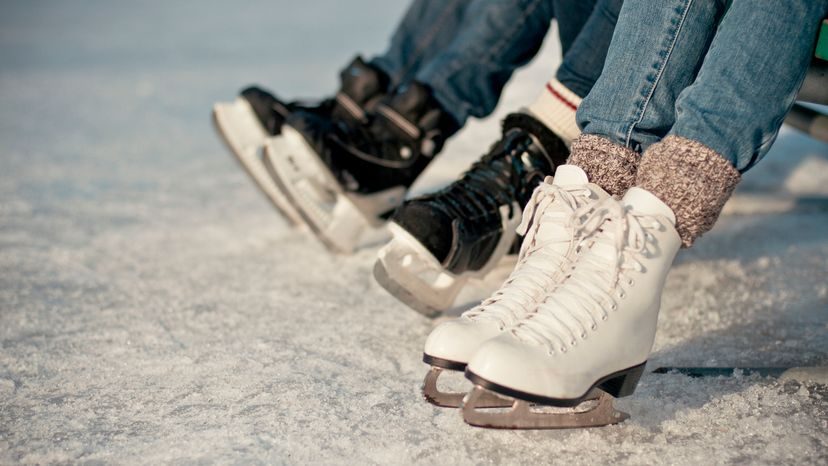
You can make a hockey rink in Troy, New York, with a garden hose. Hosed down snow freezes against the ground. Layer thin water on top. Let the cold air do the rest. By March, that lawn is just dirt again.
That trick fails in Florida. The ground won’t hold a freeze. Instead, indoor arenas build ice from the bottom up using cold concrete.
The refrigeration system under your feet
Construction crews lay miles of metal pipes inside a thick concrete slab. A massive refrigeration plant pushes ice-cold glycol through those pipes. The glycol chills the entire concrete floor below freezing.
Once the slab is cold, workers pour thin layers of water onto the surface. The concrete pulls the heat out of the water instantly. Each layer freezes solid before the next one goes down.
Painting the lines
The blue lines, center circle, and team logos are not carved in. They are painted directly onto the ice.
Once the paint dries, more ice is layered on top. This covers the paint and protects it from skate blades and Zamboni machines.
Why does this matter?
Because you are skating on a manufactured product, not natural ice. The concrete slab acts as a giant battery, holding the cold so the water stays solid even if the air temperature outside is 90 degrees Fahrenheit.
The lines you see are fragile. One hard skate against the paint can chip the logo. That’s why the top layer of ice exists. It shields the artwork below.
How long does it take to build a new rink?
It depends on the size and the cooling system, but the process is deliberate. You cannot rush the freezing. Each layer needs time to bond to the one below it.
Where does the glycol come from?
It comes from the same industrial refrigeration principles as a home freezer, just scaled up to keep a concrete slab at sub-zero temperatures 24/7.
The result is a hard, smooth surface that lasts for years, provided the refrigeration plant keeps running.