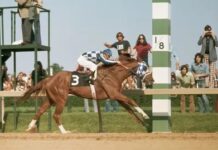




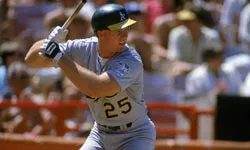
Hate the Yankees? Good. You fit right in with Boston fans.
It is a simple dynamic. They win. We watch.
For most of history, the Red Sox had a specific brand of misery. Look at the calendar. 1903. 1912. 1915. 1916. 1918. 2004. 2007.
Those are the years they broke through.
All the other years? That was different.
Time and again, victory sat on the doorstep. Then the Yankees kicked it off the porch.
The list of near-misses is long enough to fill a book. And then there is 1978.
The Bucky Dent Nightmare
The Red Sox led the American League East by a comfortable margin. It felt safe. It felt inevitable.
Then the Yankees woke up. The Red Sox folded.
They finished tied. One game decided the pennant race.
Boston lost 5-4.
Why does that number haunt you? Bucky Dent.
Dent was a solid shortstop. But that year? He hit five home runs. His batting average was a dismal .243.
How does a player with a .240 average destroy a franchise’s season?
He hits the big one. In the playoffs. Against your team.
It wasn’t just bad luck. It was a pattern. The Sox seemed to crumble under pressure. Some said it was psychology. Others said it was supernatural.
They called it The Curse of the Bambino.
The curse had a source. A trade. The worst in MLB history.
Babe Ruth.
The Trade That Started It All
Harry Frazee owned the Red Sox. He bought the team in 1916. He won the World Series in 1918.
He was also a Broadway producer.
His business on the Great White Way was failing. He needed cash. Not for baseball. For a musical.
“No, No, Nanette.”
On January 5, 1920, desperation won.
Frazee sold Babe Ruth to the Yankees.
The price? $125,000 cash. Plus a $300,000 loan.
Did the musical save him? It was a mild hit. Ruth stole the show. He became a legend in New York.
The Red Sox? They waited.
They waited 84 years.
Until 2004, the curse held.
This trade is legendary. But is it the worst?
Maybe. But it is not alone.
There are other deals that hurt teams more. Or faster. Or just more stupidly.
We are looking at the ten worst trades in baseball history.
It starts with a question.
Why did the Expos sell their best pitcher?
10: Pedro Martinez Goes to Montreal
Wait.
Pedro didn’t go to Montreal in a trade. He was with Montreal. And then he left.
This list item is tricky. It’s about the trade that sent Pedro away from the Expos, or perhaps the deal that brought him to Boston.
Actually, the entry title is “Pedro Martinez Goes to Montreal.”
That implies a trade sending him there.
But Pedro arrived in Montreal via a trade from the Dodgers in 1993. That wasn’t a “bad” trade for Montreal. It was good.
So why is this on the list of worst trades?
Maybe the list is counting the trade that sent Pedro from Montreal to Boston? No, that was a trade for Tony Fernandez and John Valenti. That was good for Boston. It was bad for Montreal.
Or maybe it refers to a different Pedro? No.
Let’s look closer.
The Expos traded Pedro Martinez to the Boston Red
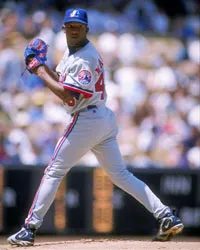

The math doesn’t lie. It never does. But sometimes, the people writing the checks just don’t see the numbers.
In 1993, the Los Angeles Dodgers made a move that still makes fans cringe. They traded Pedro Martinez to the Montreal Expos. The return? Delino Shields, a second baseman.
Three years. That’s how long Shields stuck with Los Angeles. Three years of mediocrity. Martinez? He became a monster.
A Diminutive Era with the Expos
Martinez didn’t just pitch for Montreal. He dominated. Four seasons. Fifty-five wins. Thirty-three losses. That’s a .625 winning percentage for a guy who stood out in a crowd of starters.
Then came 1997. The first year the Cy Young Award was given to the best pitcher in each league. Martinez took it.
He posted a 1.90 ERA. For those not deep into the stats, that is historic. It’s dominant. It’s the stuff legends are made of.
But baseball is a cruel business. The Expos were broke. Cash-strapped. Unable to compete with the deep pockets of the American League. So, in 1998, they flipped him. To Boston. For Carl Pavano and Tony Armas Jr.
They had to. Martinez was heading for free agency anyway. Keeping him was a financial suicide mission.
The Career Arc
Martinez didn’t stop there. Eighteen-year career. Two more Cy Young Awards. 219 wins. A 2.93 career ERA.
Shields? He hit .256 at his peak. Never higher. The gap between the two outcomes isn’t just wide. It’s an abyss.
Why Did They Do It?
The question haunts Dodger fans. Why send away a future Hall of Famer?
Look at the shoulder.
In 1992, surgeons repaired Martinez’s left shoulder. He’d dislocated it swinging a bat. A freak accident? Maybe. A red flag? The front office thought so.
He came back the next year. 1993. He made 65 appearances. 10-5 record. 119 strikeouts in 107 innings.
That’s good. But not Martinez good.
Management saw the scar tissue. They saw the risk. They decided the injury was too great. So they traded him. They kept Shields. They lost Pedro.
It’s a cautionary tale wrapped in a blue jersey. You can’t predict the future. But you can recognize talent. Or so we thought.
9: Mariners Get Rid of Randy Johnson
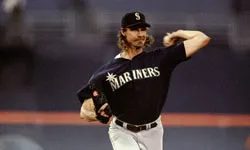

Johnson and the Price of Future Glory
The 1998 deadline approached with the Mariners in a precarious spot. They needed to shed payroll and roster bloat. So they pulled the plug on Randy Johnson. The deal sent the lanky lefty to Houston. It felt like giving away the farm to a rival. The Big Unit instantly made the Astros the team to beat in the National League.
He didn’t let them down. Johnson went 10-1 with a 1.90 ERA. He struck out 116 batters in just 84.1 innings. Houston topped the Central Division. They fell to the San Diego Padres in the Division Series, but the statement was made.
Seattle got a package in return. Freddy Garcia. John Halama. Carlos Guillen. Minor league prospects, sure. But they were the seeds for the greatest season in franchise history. Those three helped Seattle win 116 games in 2001. Garcia emerged as the ace, going 18-5. The Mariners won the World Series that year. The Astros got a playoff run. The Mariners got a dynasty.
8: Reds Send Frank Robinson Packing
Some trades age poorly because the receiver fails. Others fail because the giver is too short-sighted. The Cincinnati Reds fell into the second trap on Dec. 9, 1965. They traded Frank Robinson to the Baltimore Orioles. The return: Milt Pappas, Jack Baldschun, and Dick Simpson.
General Manager Bill DeWitt made the call. He thought Robinson was too old. The slugger was 30. It’s hard to call 30 “old” when you’re coming off nine productive seasons in Cincinnati. Robinson debuted in 1956. He was still in his prime.
Pappas stayed in Cincinnati for two and a half seasons. He won 30 games, lost nine. Good, but not transformative. Baldschun and Simpson did little for the Reds.
Robinson thrived in Baltimore. He won the Triple Crown in his first year. 49 home runs. 122 RBIs. .316 batting average. He led the Orioles to their first World Series title, beating the Los Angeles Dodgers. He played six years in Baltimore. He won another ring in 1970. This time, his former team, the Reds, was on the losing side of the final score. He became a Hall of Famer. The Reds got a pitcher who won 30 games. They lost a legend.
7: Mets Trade Nolan Ryan
New York has a long history of questionable roster construction. But the Dec. 10, 1971 trade for Nolan Ryan stands out. The Mets dealt Ryan and three others to the California Angels. They got shortstop Jim Fregosi in return.
At the time, it looked smart. Ryan was erratic. Over five seasons with New York, he went 29-38. He walked 344 batters. He struck out 493. He was a high-variance nightmare. The Mets needed a third baseman. Fregosi fit the bill. No one complained. It seemed like a logical move.
It was a catastrophic error in hindsight. Ryan blossomed. He threw seven no-hitters in his career. In six of his first seven seasons with the Angels, he led the American League in both strikeouts and walks. He was dominant.
Fregosi lasted 146 games with the Mets. He batted .233. He was sold to Texas in the middle of the 1973 season. The Angels got a future Hall of Famer. The Mets got a shortstop who couldn’t hit. The disparity in value was stark. Ryan became one of the greatest pitchers in baseball history. Fregosi became a footnote.
6: Braves Get Smoltz
The Atlanta Braves have a knack for finding pitching gold, but the acquisition of John Smoltz in 1988 was different. It wasn’t just a pickup. It was a transformation. The Braves sent Mike Bielecki, Jeff Johnson, and Chris Hammond to the Detroit Tigers. They got Smoltz.
Smoltz was raw. He was young. He needed development. The Braves had the patience to give it to him. He became a Cy Young winner. He became a closer. He became a Hall of Famer. The Tigers got three prospects who never panned out
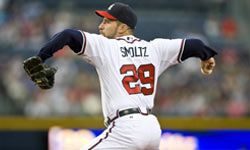
The Doyle Alexander Trade
Have you ever heard of Doyle Alexander? Probably not. Frankly, he wasn’t a bad pitcher. The right-hander knew how to throw strikes. In 1987, the Detroit Tigers were in the middle of a pennant race and needed another arm to close the deal. They traded a young prospect named John Smoltz for Alexander.
Drafted in the 22nd round in 1985, Smoltz was young and had a hefty 5.73 ERA in AA minor league ball. He walked more batters than he struck out. At the time, it was a good trade for Detroit. Alexander went 9-0 for the Tigers with a miniscule 1.53 ERA. He helped the Tigers win the American League Eastern Division, but they lost to the Minnesota Twins in the league championship series.
Smoltz started out slow with the Braves. He won two of the 12 games he started in 1988. The next year, he had a 12-11 record. By 1996, Smoltz had a 24-8 record and eventually became a Hall of Fame pitcher. Among other accomplishments, Smoltz was an eight-time National League All-Star, he won the 1996 Cy Young Award, he tallied 50 saves during the 2002 season and won the World Series with the Braves in 1995.
Why the Smoltz Trade Still Haunts Detroit
The John Smoltz trade for Doyle Alexander is often cited as one of the most lopsided deals in baseball history. Detroit saw a raw talent with high walk rates and assumed he needed more seasoning. They got a veteran who could pitch in September. Smoltz got a chance to grow into an ace.
Alexander’s 1.53 ERA in 1987 was impressive. It wasn’t luck. He knew how to locate. But looking back, the John Smoltz to Tigers trade looks like a cautionary tale about evaluating potential versus present value. Smoltz’s journey from AA to Cy Young winner took eight years. Detroit didn’t wait.
The Tigers won the division. They lost in the ALCS. Alexander retired a few years later. Smoltz built a legacy that includes two different types of Cy Young awards—one as a starter, one as a reliever. That’s a level of versatility Alexander never touched.
Roger Maris and the Perfect Trade
Before Mark McGwire, Barry Bonds, Sammy Sosa and allegations of steroid use, there was Roger Maris, a chain-smoking outfielder who set baseball’s single-season home run record in 1961. Maris, with his patented crew cut, accomplished the feat as a New York Yankee. Before he donned the pinstripes, Maris played for the Kansas City Athletics. The Athletics shuttled Maris to New York in exchange for legendary pitcher Don Larsen (he threw the only perfect game in World Series history), Norm Siebern and an aging Hank Bauer. The Yankees also got Joe DeMaestri and Kent Hadley in the trade.
In 1961, Maris set baseball on fire. Teamed with Mickey Mantle, the “M & M Boys,” as they were dubbed, chased after Babe Ruth’s celebrated single-season home run mark of 60. Mantle and Maris battled each other until Mantle dropped out of the race early due to an injury. Maris tied Ruth’s record on Sept. 26, and surpassed the Sultan of Swat on the final day of the season. He was voted the American League’s Most Valuable Player.
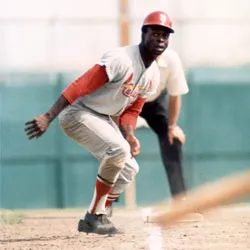

The Lou Brock Trade That Changed Everything
The 1964 swap of Lou Brock for Ernie Broglio looks like a masterclass in hindsight. At the time, it didn’t look like much. The Chicago Cubs were moving on from a player who had spent two and a half seasons in Chicago without setting the world on fire. Brock’s 1963 batting average was a mediocre .251. The year before, he sat at .262. He wasn’t burning up Wrigley Field.
St. Louis took on pitcher Ernie Broglio. He won 21 games and lost only nine in 1960. He was young. Everyone thought he had plenty of good years left. It seemed like a fair deal.
Then Brock stepped into the batter’s box for his first game with the Cardinals. He struck out on three pitches.
He caught fire after that.
Brock hit .348 for the remainder of the 1964 season. He stole 33 bases. The Cardinals won the National League pennant that year. Brock found his rhythm with St. Louis. He hit .300 seven times between 1965 and 1979. He led the league in stolen bases eight times. He retired as the all-time leader in steals.
Broglio didn’t fare as well. He won only four games for the Cubs in ’64. He was out of the game after 1966. He faded into the dust bin of history.
The Jay Buhner Trade: A Cultural Landmark
The New York Yankees have a long history of questionable personnel moves. In 2003, they traded for Kevin Brown. He was 39 years old and past his prime. In 2004, Brown won 10 games until he broke his hand punching a wall. He was supposed to be a big-game pitcher. He wasn’t.
In 1999, the Florida Marlins acquired Mike Lowell from the Yankees. Lowell was solid in South Florida. He helped Miami beat the Yankees in the 2003 World Series. He later became the cornerstone of the Boston Red Sox. The list of Yankees missteps goes on.
But the worst trade in franchise history happened in 1988. The Yankees sent Jay Buhner and another player to the Seattle Mariners for Ken Phelps.
The deal was consummated on July 21, 1988.
Buhner was young. He was just starting his career. Phelps was 33 years old. That is ancient by baseball standards. During the second half of the 1988 season, Phelps batted a laughable .244 with 10 home runs.
Buhner played 13 seasons with Seattle. He hit 310 career home runs.
The blunder was so profound it seeped into pop culture. In Seinfeld, Frank Costanza screams at Yankees owner George Steinbrenner: “What the hell did you trade Jay Buhner for?”
The Oakland A’s Trade of Mark McGwire
You have to try hard to look past the steroid era when discussing Mark McGwire. Try to ignore the Congressional stonewalling. Try to forget his self-imposed exile after allegations of drug use tarnished his career.
In 1997, the Oakland A’s traded McGwire to the St. Louis Cardinals.
They got T.J. Matthews, Blake Stein, and Eric Ludwick in return.
At the time, the San Francisco Chronicle warned that this trade might haunt the A’s just as the Babe Ruth trade haunted the Red Sox. The A’s moved McGwire before the July 31 trading deadline. The first baseman was eligible to become a free agent at the end of the year.
McGwire’s first full season with the Cardinals was historic. He broke Roger Maris’s single-season home run record. He belted 70 homers. He helped restore fan interest in baseball after the 1994 strike nearly ruined the game. In 1999, he hit 65 more.
Matthews, Stein, and Ludwick didn’t amount to much.
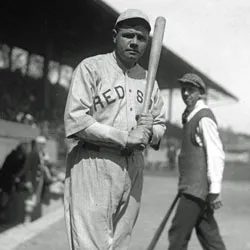
The date was January 5, 1920. Harry Frazee stood before a room of reporters and dropped a bombshell. The Boston Red Sox had sold Babe Ruth to the New York Yankees. He wouldn’t say the price. He just called it “something enormous.” It was an amount the club could not afford to refuse.
Prohibition was only 11 days away. Dan Shaughnessy wrote that this move would drive Sox fans to drink. Ruth became the foundation for the greatest dynasty in the history of professional sports.
No matter how you slice it, the worst trade in baseball history occurred on that cold day. No. The worst trade in sports history.
The Red Sox knew what they had. Ruth was a machine for six years. He was a stellar pitcher. He won 18 games in 1915. 23 a year later. And 24 in 1917. He batted above .300 in four of those six seasons.
Yet it was with the Yankees that Ruth became iconic. He shifted to a full-time outfielder. He led New York to four World Series victories. He became baseball’s home-run king. He hit 60 homers in 1927. 714 during his career. Ruth was larger than life. Famous on and off the field. A superstar before the term existed. A cultural icon before anyone knew how to use that phrase.
His talent saved baseball. The 1919 Black Sox scandal had threatened to ruin the game. Ruth pulled the sport back from the brink.
For the Red Sox, the Curse of the Bambino lingered for more than 80 years. Finally, in 2004, Boston won their first World Series since 1918. They won again in 2007. Perhaps they exorcised the curse forever.
Or perhaps they’re just teasing their fans.