




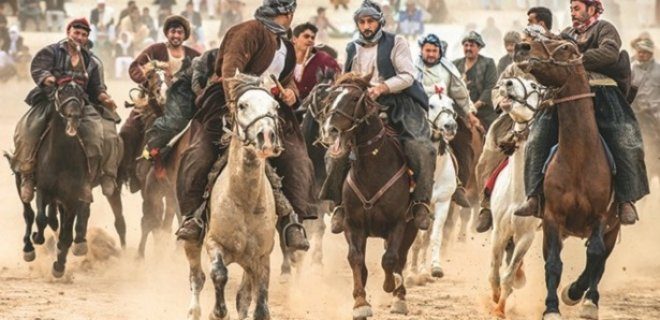
Forget what you know about polo. The American version is a polished spectacle. Buzkashi is something else entirely. It is a raw, violent contest that originated in Central Asia and still dominates the region.
The goal seems simple at first glance. Ride a horse. Carry a carcass. Cross a finish line.
But the details change everything. Players are mounted on horseback. They carry the headless body of a goat or calf. The weight is heavy. The terrain is often rough. You have to cover a specific distance while holding on for dear life.
There is no referee blowing a whistle to stop the chaos.
Combat is part of the game. Competitors use whips to strike each other. This isn’t just about speed or skill. It is about who can hold their ground when everyone else is trying to knock you off your mount. The “headless goat” detail might sound gruesome, but it is the central object of the match.
Why does this sport survive? It tests the bond between rider and horse in a way no other game does. It requires strength. It demands nerve. And it remains the most fascinating, terrifying sport in the world.
The Mud Pit: How Bog Snorkelling Actually Works
You’ve heard of triathlons and marathons. But have you ever tried to sprint through a swamp? Welcome to Bog Snorkelling, the ultimate test of endurance where the terrain is less “track” and more “peat.”
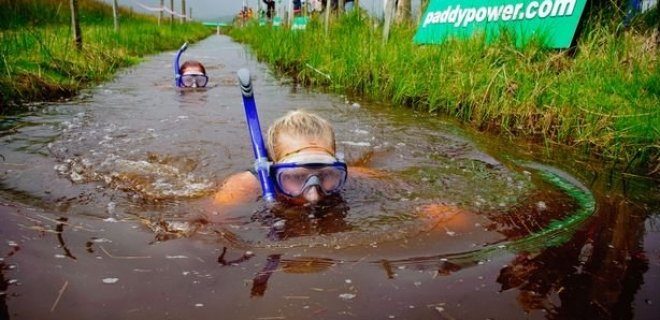
Also known as peat bog swimming, this isn’t just a dip in the water. It’s a full-body battle against the suction of a 20-meter-long trench filled with rotting vegetation and mud. The rules are simple, but the execution is anything but. You need goggles and a snorkel. That’s it. No wetsuits. No flippers. Just you, the muck, and the relentless pull of gravity.
The real twist? You can’t swim laps. The only legal stroke is the dolphin technique.
Think back to those childhood games in the pool. You arch your back, thrust your hips forward, and kick like a sea mammal. That’s exactly what you’re doing in a freezing, acidic bog in Wales. Why? Because the mud is too deep for efficient kicking, and the drag from the peat makes breaststroke impossible. You have to undulate. You have to push your body forward in a wave-like motion, fighting every inch of resistance.
It sounds absurd. It is absurd. But it’s also genuinely exhausting. The peat acts like quicksand, grabbing at your limbs. One wrong move, and you’re stuck. The cold adds another layer of misery, especially in the spring when the event takes place.
So, which athlete can handle it? The winners are typically those with high core strength and a low center of gravity. It’s not about speed in the traditional sense. It’s about efficiency in chaos.
And yes, people actually register for this. Hundreds of them. Every year. At the Llangwm Bog in Wales. They line up at the start, shivering, eyes hidden behind foggy goggles, preparing to dive into 1.5 feet of muck.
Why would anyone do this?
There’s no medal at the Olympics. No prize money that covers the therapy session afterward. But there’s pride. And a story you can tell at the pub. And maybe, just maybe, the satisfaction of knowing you survived a sport that defies common sense.
It’s ugly. It’s messy. It’s slow.
And it’s perfect.
While most fans know football or hockey, there’s a niche discipline in Finland that defies modern athletic trends: wife-carrying.
It’s not just a novelty. It’s a legitimate sport with strict rules and a serious following.
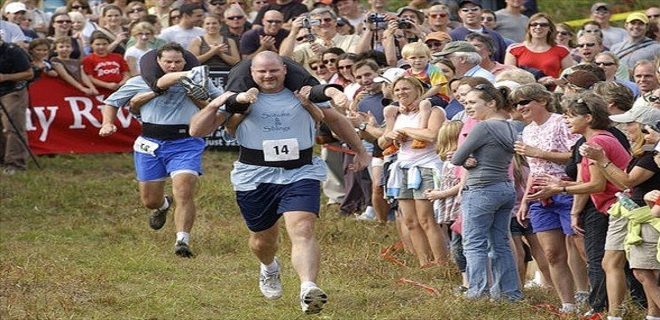
Every year, thousands gather to watch men sprint 245 meters while carrying their partners. The technique varies. Some lift their wives onto their backs. Others cradle them across their chests or shoulders.
The goal? Finish the race as fast as possible without dropping your partner or touching the ground yourself.
It sounds chaotic. It is. But it’s also deeply rooted in Finnish tradition.
Why This Sport Matters
You might wonder why anyone would train for this.
The answer lies in history.
Wife-carrying isn’t just about strength. It’s about trust. Balance. Coordination.
In its earliest days, it may have been tied to wartime survival myths — though those legends are hard to verify. Today, it’s more about camaraderie and fun.
Men train specifically for it. They practice lifts. They drill transitions. They simulate the 245-meter course over and over.
How It Works: The Rules
Let’s break down what actually happens during a race.
First, the carry method is chosen at the start. Once the race begins, you can’t switch techniques mid-stride.
If you drop your partner, you’re out.
If your partner touches the ground, you’re out.
There’s no penalty for being slow. But speed wins.
The course includes obstacles. Often, water pits. Sometimes, wooden hurdles.
Dropping into a water pit doesn’t disqualify you — but it costs time.
That’s where training pays off.
Which Teams Dominate?
You’d think bigger men would dominate.
They don’t always.
Technique matters more than brute strength.
Some of the fastest competitors are leaner men who’ve mastered the “Estonian carry” — a method where the partner is held upside down, head first, against the back.
It’s efficient. It’s aerodynamic. It’s risky.
But it works.
Teams often consist of a male carrier and a female partner. The woman’s weight is factored into the total, but the race is timed on the pair’s combined effort.
There’s no gender rule for the carrier — though historically, it’s been men carrying women.
And yes, there are women who compete too. They carry other women. It’s less common, but it happens.
Where to See It
The main event is held annually in Sonkajärvi, Finland.
That’s where the World Wife-Carrying Championships take place.
It’s small town. Population around 5,000.
But during the competition, it’s packed.
Crowds line the course. They cheer. They laugh. They bet on their favorite pairs.
It’s not televised globally. But it’s a cult favorite.
If you’re in Finland in July, go.
Why Fans Love It
It’s unpredictable.
It’s physical.
It’s funny without being cruel.
You see men strain. You see women adjust their grip. You see near-misses
Chessboxing: Where Brains Meet Brawn
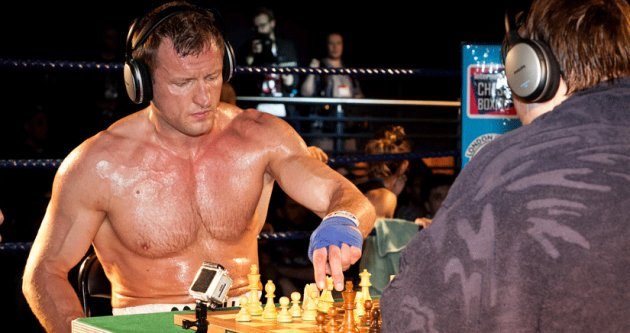
Chessboxing. It sounds like a joke at first. A punchline waiting to happen. But it is real. It is brutal. And it is the ultimate test of dual-minded endurance.
The format is unforgiving in its simplicity. Chessboxing alternates between two completely different arenas of conflict. You get six rounds of chess. Then five rounds of boxing. Eleven rounds total. No breaks. No mercy.
You cannot just be a boxer. You cannot just be a grandmaster. If you lose on the clock, the clock hands do not care how hard you hit in the previous round. If you get knocked out, the board does not matter. You have to win with your brain and your body.
This is not a hybrid sport for the faint of heart. It requires a specific kind of athlete. Someone who can calculate a bishop sacrifice while their heart rate is one hundred and twenty beats per minute. Someone who can take a jab to the ribs and then look at a chessboard for the next four minutes.
“It forces you to regulate your emotions. One moment you are in a fight for your life. The next, you are sitting still, sweating through your shirt, trying to find the best move.”
The chess rounds are standard. Classic time controls. Usually four minutes per player. Checkmate is the only way to win that round. Draw by agreement is possible but rare. Most players fight to the bitter end. A win on the chessboard gives you a psychological edge. It makes the opponent anxious. It makes them swing harder in the next boxing round.
The boxing rounds are shorter. Three minutes each. Five rounds of pure combat. Knockout or decision. If you win the boxing rounds, you win the match. But you have to survive the chess first.
Where does this come from? The idea has roots in French comic books from the 1990s. Le Boxeur and Le Pupil. But it was Enrik Van Herle who turned it into a sport. He formalized the rules. He made it legitimate. Now, it has a world championship. Events happen in London, Berlin, and beyond.
Why do people watch it? Because it highlights a rare trait. Dual talent. Most athletes specialize. A chessplayer gets weak. A boxer gets slow. Chessboxing forces you to be both. To switch modes instantly. From silent concentration to explosive violence. It is mesmerizing.
The strategy changes completely between rounds. In the chess round, you want to stay calm. You want to conserve energy. You do not want to panic. In the boxing round, you want to attack. You want to score points. You want to break your opponent down.
There is no middle ground. You are either checking your king or checking your opponent for a weak spot. The transition is the hardest part. The adrenaline dump. The sudden shift from mental to physical. Many fighters freeze. They stare at the board when they should be throwing punches. They throw punches when they should be thinking.
It is a sport of extremes. Of contrasts. Of black and white squares and red gloves.
Some say it is too complex. Too chaotic. But the fans love it. They see the human element. The struggle. The mind breaking under physical pressure. The body breaking under mental fatigue.
Why Zorbing Is the Underrated Adventure Sport You Haven’t Tried Yet
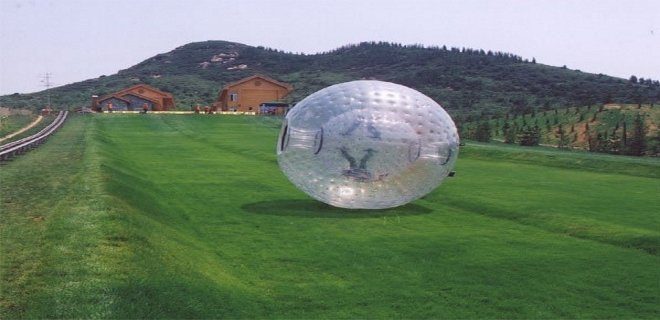
Zorbing has been around for 15 years, yet it’s still spreading like wildfire. It looks like a death wish on paper: you strap yourself into a giant plastic sphere and let gravity take you down a hill. But here’s the twist. Despite how dangerous it appears, there have been zero recorded injuries. Not one.
The mechanics are simple. You get inside. The ball rolls. You survive. It’s that simple.
So why does no one talk about it? Maybe because it sounds too silly to be a real sport. Or maybe because the adrenaline rush is so pure, so unfiltered, that people just can’t explain it to outsiders. But if you’re looking for an activity that combines physics, fear, and laughter in equal measure, this is it.
The Safety Question: How Is It Actually Safe?
People always ask the same thing. How can something this risky be injury-free? The answer lies in the design. The inner ball is suspended by harnesses and air pressure inside the outer shell. You aren’t just rolling in a hollow bubble. You’re cushioned. The physics of the sphere distributes force evenly. When you hit a bump, the ball absorbs it. Your body doesn’t feel the jolt.
It’s not just luck. It’s engineering.
Where to Try Zorbing for the First Time
You won’t find this in your local park. You need hills. Real hills. The sport originated in New Zealand, and that’s still the best place to start. Other spots include parts of Europe and scattered adventure parks in North America. But the origin matters. The terrain there is steep, the views are insane, and the culture around the sport is welcoming.
Which Ball Is Right for You?
There are two main types. The dry one, where you’re just rolling. And the wet one, where water is added for extra splash and speed. If you’re nervous, start dry. The wet version adds unpredictability. You’re sliding on water inside a ball on a grassy slope. It’s chaotic. It’s fun. But it’s also harder to control.
The Verdict on Zorbing
It’s not Olympic material. No one is judging scores. But that’s the point. It’s about the experience. The sheer absurdity of it. You leave the hill bruised in ego, not in body. Covered in mud. Laughing until your sides hurt.
And that’s rare these days.
The Parkour Roots of Yamakasi
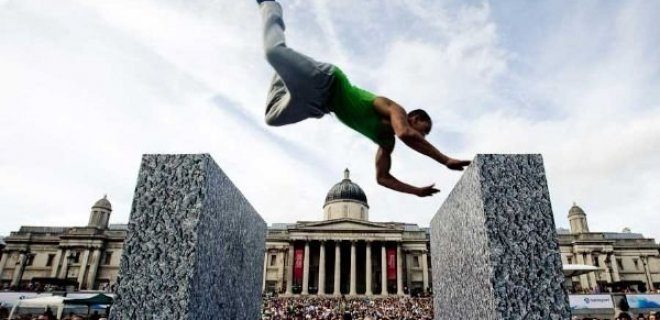
It started as a cinematic concept, but Yamakasi turned into a legitimate physical discipline. The film that inspired it wasn’t just entertainment; it was a blueprint for urban movement. Practitioners don’t just run. They sprint across obstacles, leap between gaps, and climb structures with fluid precision. It’s not about fighting opponents. It’s about conquering the environment through constant motion and calculated jumps. The aesthetic comes from the movie, but the muscle memory is real.
The Cheese Rolling Tradition in Brockworth
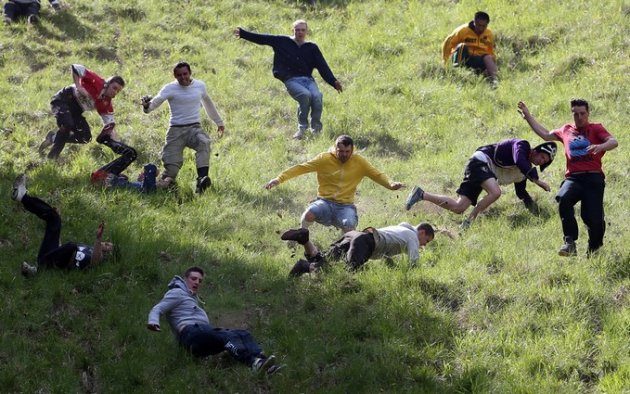
Cross the channel to England, and the stakes get weirder. In the town of Brockworth, people don’t parkour. They chase dairy. This is cheese rolling. A wheel of Wensleydale cheese is sent careening down Cooper’s Hill. Participants dive after it. They tumble down the steep, uneven slope, trying to stay upright while chasing a runaway wedge of cheese. The goal is simple: beat the cheese to the bottom. It sounds ridiculous. It is. But it’s a tradition that refuses to die, drawing crowds who want to see who can survive the descent fastest.
Why These Sports Defy Convention
Both activities reject standard stadium rules. One uses the city as its gym. The other turns a hill into a chaotic race track. Why do people do this? The thrill of unscripted movement? Maybe. The absurdity of chasing a rolling wheel of cheese? Definitely. They are sports for those who find traditional arenas too predictable.
The Talar Strike: How Finland Made the Ankle Bone the Center of Attention
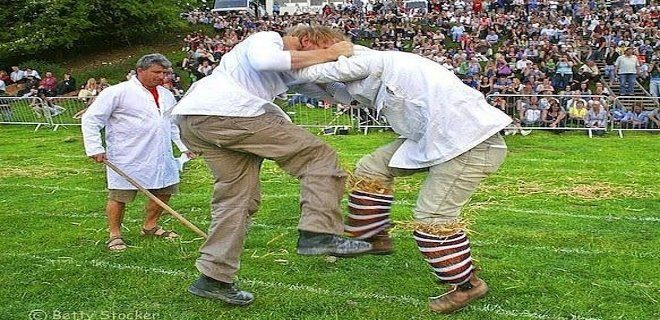
Let’s be real for a second. The ankle bone connection holds the world together, or at least it does in the absurd, high-stakes world of competitive talar strike. What started as a quirky Finnish prank has somehow evolved into a recognized sport where the primary objective is to inflict controlled pain on your opponent’s most vulnerable joint. It is not for the faint of heart. Or the faint of ankle.
Participants in talar strike tournaments strap on protective wristbands—not to protect their own wrists, but to prevent their hands from injuring themselves while delivering the precise, sharp blows to the opponent’s ankle. The rule is simple, brutal, and oddly specific: hit the other guy’s ankle bone. Hard. But don’t break theirs. Break their spirit, maybe. Their balance, absolutely. But keep the bone intact so the match can continue. It’s a delicate dance of violence.
Why did this catch on in the US? Probably because we love a good underdog story, even if the underdog is a small, dense bone in the lower leg. The sport requires a mix of agility, precision, and a complete disregard for standard athletic safety norms. You aren’t trying to knock someone out. You are trying to make them hop. And hop. And hop. Until they concede.
The protective gear is a key component of the talar strike experience. Without those wrist guards, competitors risk fracturing their own metacarpals or spraining their wrists from the impact of their own strikes. So yes, you hit them. They hit you. Everyone wears wrist wraps. No one wears shin guards. It’s an elegant system of mutual assured discomfort.
The One-Wheeled Reality
It sounds like a prank. A circus act waiting for a punchline. But the unicycle is a sport in its own right, and the people who ride them aren’t just trying not to fall over—they are building a hierarchy of balance that would make a gymnast weep.
At the core of this discipline is the single-wheeled bicycle. One wheel. One seat. No handlebars to hide behind. You are exposed. Every wobble is a conversation between your center of gravity and the asphalt.
More Than Just Rolling Around
Most outsiders assume it’s about speed. It’s not. It’s about control. Static balance. The ability to hover in place while the world spins.
“You don’t ride a unicycle. You negotiate with it.”
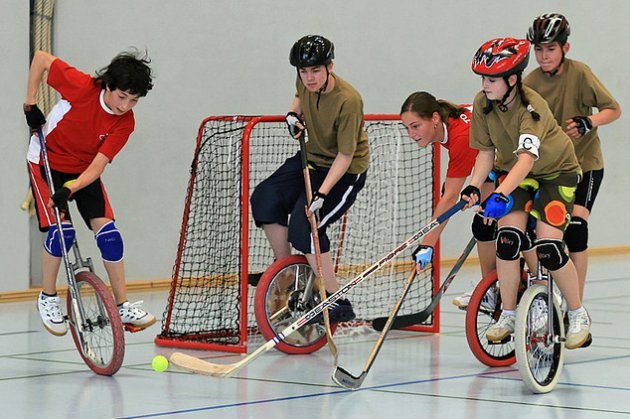
The activities performed on these machines are as varied as they are absurd. There are no standard rules for a “unicycle hockey” league because the sport fragments into niche disciplines. You might see riders playing unicycle hockey, dodging sticks on wheels. Or attempting unicycle yoga, where the challenge isn’t just holding a pose, but maintaining it while the single contact point with the ground shifts millimeter by millimeter.
Why The Single Wheel?
Why strip away the stability of two wheels? Because the constraint creates the art. With two wheels, you can lean. With one, you must pedal. The act of moving forward is the act of staying upright. Stop pedaling, and you fall. It’s a continuous loop of correction.
This is how you master unicycle balancing : by embracing the failure. You fall. You get back on. You learn the micro-adjustments of your hips.
Where It Happens
You won’t find this on ESPN. It happens in parking lots. In community centers. At underground festivals where the crowd gathers around a flat concrete island. The unicycle community is tight-knit, obsessive, and fiercely proud of their ability to traverse obstacles that would break a cyclist.
Which path is harder? Riding a straight line? Or attempting a unicycle freestyle routine that involves hopping curbs, juggling, and dismounts that look like magic tricks gone wrong?
The skill is in the silence. The lack of clatter. Just the hum of the tire and the sharp intake of breath from the rider.
It’s not about getting there. It’s about not falling on the way.
Bounce Trampolines Turn Court Into a Circus
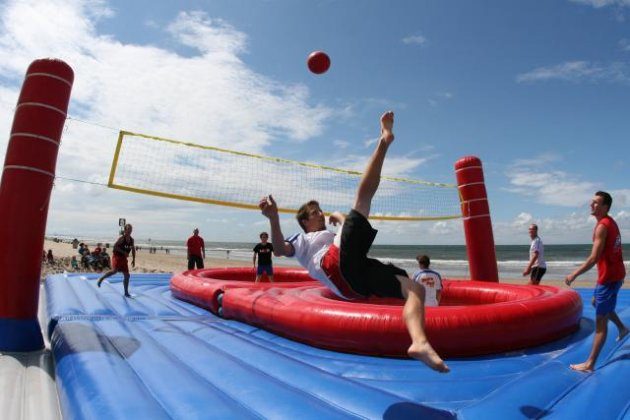
The court isn’t a flat line of sand. It’s a Bossaball court, which means the playing surface is a giant inflatable trampoline. 🎪
This isn’t just volleyball with a jump. It is a collision of football skills, volleyball rules, and Latin dance rhythms. You see players bouncing high into the air, attempting bicycle kicks over the net. The sound of rubber soles hitting the mat echoes through the venue. It is chaotic. It is loud. It is visually stunning.
The game blends the gravity-defying athleticism of gymnastics with the team strategy of sports you know. Players use their hands to set up spikes that look more like acrobatic stunts than traditional volleys. The “dance” element comes from the music—usually upbeat Latin tracks—and the flair players add to their movements.
Why does it matter? Because it changes how you view the court. Standard volleyball relies on positioning and timing. Bossaball relies on height and creativity. You aren’t just trying to get the ball down; you are trying to do it while hanging in mid-air for what feels like an eternity.
The inflatable walls keep the ball in play longer. This extends rallies. It forces defenders to jump higher than they ever have in a standard match. The atmosphere shifts from tense concentration to immediate spectacle.
The game blends the gravity-defying athleticism of gymnastics with the team strategy of sports you know.
It appeals to fans who crave spectacle. If you watch traditional beach volleyball, you see precision. Here, you see risk. Every spike is a potential highlight reel moment or a spectacular fall. There is no middle ground.
The equipment is simple but deceptive. The trampoline bed absorbs impact but returns energy. Players must learn to control their landing as much as their takeoff. One wrong step and you are bouncing back into a teammate. The learning curve is steep. The payoff is fun.
Teams often include players with backgrounds in trampolining or gymnastics. They treat the court like a stage. The net is lower than in standard volleyball, allowing for more aggressive attacks. The ball is slightly larger and softer, reducing sting but increasing visibility.
Where did this come from? It emerged as a reaction to the rigidity of traditional sports. It asks the question: what if we removed the boundaries of gravity?
Fans watching live describe the experience as breathless. The sound of the bounce is rhythmic. The crowd reacts to every touch. It is less about the score and more about the execution.
You do not just watch this sport. You feel the vibration through the floor. The energy is contagious. It pulls you in even if you do not understand the rules immediately.
The Final Push: Who Holds the Advantage?
The scoreboard doesn’t lie, but it rarely tells the whole story. With the clock ticking down and the tension thick enough to cut with a knife, the momentum has shifted. It’s not just about who is winning; it’s about who wants it more when the pressure mounts. The defense has tightened. The offense is looking for that one opening, that split-second gap in the armor.
Breaking Down the Key Defensive Stops
Look at how the back line has adjusted. They aren’t just reacting anymore. They’re anticipating. The high press has forced turnovers in dangerous areas, leading to quick counter-attacks that caught the opposition sleeping. This isn’t luck. It’s a game plan executed with precision. When the midfield gets squeezed, the wings open up. Simple, effective, and ruthless.
The Star Player’s Critical Moment
You can’t talk about this match without mentioning the captain. That third-quarter drive was everything. Three consecutive completions. First down. First down. First down. The crowd went silent, then erupted. It wasn’t just the yardage gained; it was the confidence restored. When a team is on the ropes, you need a leader who can look adversity in the eye and blink last. He did exactly that.
Why This Win Matters for the Playoff Picture
Forget the regular season stats for a second. This is about seeding. This is about home-field advantage. A win here solidifies their position in the top tier. It sends a message to the rest of the league: do not underestimate this squad. They have the depth, the experience, and the firepower. The path forward is still narrow, but the foundation is set.
What Comes Next?
The rest is history, or so they say. But in sports, history is written in real-time. Tomorrow, they rest. Today, they celebrate. The trophy case is looking a little emptier than it was a month ago, but every win adds another notch. The journey isn’t over. It never really is.