
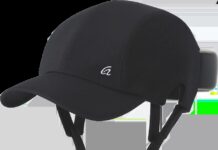



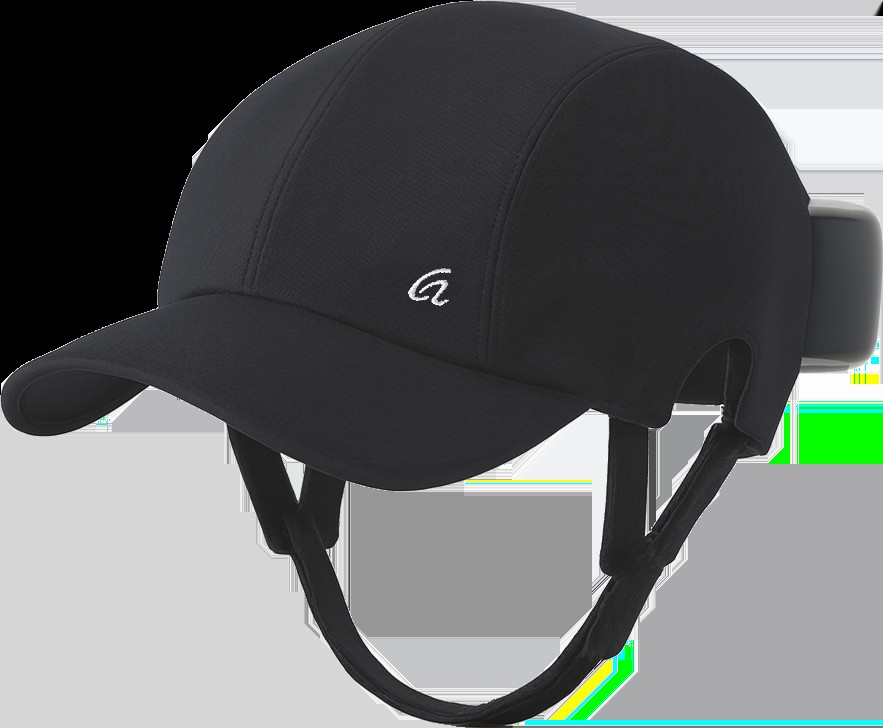
Psychiatry is a mess without objective tests. You sit down, tell a stranger about your feelings, and hope the diagnosis sticks. Universal Brain thinks they have a faster way. They just got FDA 510(k clearance for Neurotique, a five-minute brain assessment tool. It looks like a baseball cap.
The Gear
It’s not just a hat. The device features an eight-channel dry EEG system plus two electrooculography electrodes to track eye movements. There’s a rechargeable battery inside, naturally, and it hooks up to a digital testing platform. The magic happens via event related potentials (ERP). Basically, the cap measures how your brain responds to specific tasks. Five minutes. That’s it.
The brain behind this is Kazu Okuda. He founded Universal Brain in 2014 but really pushed the accelerator in 2022 by recruiting Greg Hajack as chief scientist. Hajack is a clinical psychologist at Santa Clara University. More importantly, he led Google X’s Project Amber.
Project Amber failed, technically. It was a three-year quest for a single biomarker for depression, wrapping up in 2018 without a clear winner. Hajack didn’t learn to give up though. He learned what didn’t work. Now he’s trying again, but with different eyes.
Stanford psychiatry professor Leanne Williams published a paper in Nature in 2017 arguing depression isn’t one thing, but several subtypes. The tech landscape has shifted since then, too. Machine learning is cheap and accessible now, flooding the EEG startup market.
Money And Pilots
Universal Brain isn’t operating on hope alone. They’ve raised $7.9 million in seed money and recently grabbed a $2 million grant from the Japanese government. This summer they launch clinically. 250 clinics are already saying yes.
But they’re looking at pharma contracts, too. Okuda highlighted two active pilots in life sciences, one targeting mental health, another mild cognitive impairment. There are two new studies kicking off in the US and Japan focused on treatment resistance. Why? To validate applications, obviously. More data drives better platforms. It’s a virtuous cycle if the hardware actually works.
“We’re convinced that psychiatry is Moving towards a different paradigm driven by Objective and Reliable Biomarkers.”
– Kazu Okuda, CEO
They want to sell the caps and charge a usage fee, leaning on existing EEG reimbursement codes.
Frontier Psychiatry
There’s money to be made in the margins. The market calls this “frontier psychiatry.” These are outpatient clinics offering Transcranial Magnetic Stimulation (TMS) or Esketamine for people whose drugs stopped working.
The numbers are stark. An Edgemont Partners report estimated that while 21 million Americans have depression, 12.8 million never seek help. Of those who do, 6.7 million don’t respond to pills. Roughly 5.4 million qualify for TMS or Esketamine treatments. TMS sales grow 8% annually, expected to top $500 million by 2029.
Ketamine is already worth billions. Psychedelic medicines are slowly gaining regulatory traction, too. Patient interest isn’t waiting for bureaucracy. Private clinics are popping up fast. Radial Health took $50 million and expanded to seven locations late last year. Salma Health raised $80 million in spring 2015 and now runs three California locations. They even recruit patients for clinical trials. Demand outstrips traditional supply.
Faster Targets
TMS changed when the FDA approved it for treatment resistant depression in 8. It works on migraines, OCD, too. Eligibility rules loosened over time, allowing for broader use, younger patients, more comorbidities.
Standard TMS sucks. Market leaders like Neuronetics require thirty separate visits over six weeks. Who has that kind of time? Shorter options are disrupting the old models. Stanford created SAINT (Accelerated Intelligent Neuromodulation therapy). It’s intensive. Five days only. Cleared in 2010 by the FDA, built on work by the late Nolan Williams. SAINT uses fMRI to map the brain precisely before zapping it.
The problem? Cost. Those scans run into thousands of dollars. Ampa Health offers a solution with a one-day treatment cleared last year. No fancy scanners required, just a scalp measurement. You pay a flat fee. Simple.
Wave Neuroscience cleared its EEG-guided TMS therapy for PTSD recently. They call it MeRT. Still five weeks, but maybe more accurate than blind guessing. We don’t have head to head data on cost versus efficacy yet. fMRI versus EEG versus unguided treatment remains a grey zone. Insurance companies are easing up, some older clinics retrofitting old systems for new tricks.
Universal Brain sits right in this gap. They bet that mental health moves forward not through stories, but through functional assessment. Okuda promises ten times faster results, ten times cheaper than competitors, more reliable than symptoms alone.
Will it stick? Biomarkers are hard to prove. The science is shifting, yes. The funding is there, yes. But can a baseball cap really tell your therapist what your brain feels? Time will tell, I guess. Or the data will. Whichever comes first.