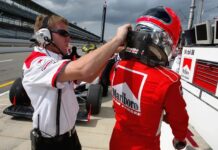




Curves define competitive events. The place where the delivery takes place. Drivers either win or crash. The physical principle is simple. It slows down in corners and accelerates smoothly in corners. But machines complicate things. Most stock cars use manual transmissions. This means that shifting gears is essential.
On public roads, it is possible to press the clutch and roll around the corner. Doing this on the track will damage your transmission. When the clutch is engaged, the engine idles. If you press the gas pedal hard to get back into the race laps, the car may jerk. This strong impact can damage the clutch and transmission. It also makes controlling the car almost impossible. The solution is to change the heel and toe down.
Heel-and-toe is a dance performed while sitting. Match the speed of the motor and the speed of the wheel. This can also be performed with standard gearbox cars. This is the breakdown.
How to clutch down heel-toe
During the game, this process happens in a second. This can also happen if your opponent intentionally crashes into your bumper. This is called a bump drawing. I’ll do this. Let’s start with the mechanical principles.
- Approach the corner and start braking. The right foot is on the brake pedal.
- Move your foot slightly towards the gas pedal. You are blipping the throttle.
- Press the clutch with your left foot.
- Focus on the bottom of your right foot. Maintain brake pressure.
- Press the gas pedal with your right heel. This causes the engine to accelerate without moving the car forward.
- Observe the tachometer. You need to increase the RPM significantly. For go-karts, 1 or 2 thousand is enough. For stock cars, the number is even higher.
- Shift down.
- Release the clutch.
As the game progresses, the required pressure also changes. The brakes overheat. The pedals may require more force at the beginning than at the end. One driver remembers pressing the brake pedal to the floor. I couldn’t get to my heel, so I had to press the gas on my ankle.
Why RPM equivalence is important
The speed of the engine must correspond to the speed of the gear. If the engine is too slow for the gear, the car stalls or jerks. Too high a speed will wear or damage the gearbox. The heel and toe prevent this mismatch. This allows the driver to brake and downshift at the same time.
This technique is not just about smoothness. It’s about control. A bumpy car is an unpredictable car. In stressful environments, unpredictability can lead to crashes. Drivers with heel and toe control can maintain momentum. They get out of corners faster. They were gain positions.
The next step in racing dynamics is the use of other vehicles to increase speed. The slipstreaming is based on slip flow. However, this requires precise throttle control. This requires skillful pedaling.