





It started with a risk. Thirty years ago, doctors performed an experimental procedure on a young girl suffering from a rare, inherited immune deficiency. They introduced a functional copy of a defective gene into her cells. The goal was simple yet monumental: repair the genetic code to cure a disease that had no other treatment. The procedure worked. It was hailed as a medical milestone, proof that human biology could be rewritten.
Now, three decades later, the question isn’t just if it works. It is how far we have come. Can modern medicine routinely fix these errors? Which conditions are now within reach? And what does the technology actually look like beneath the headline?
How Gene Therapy Actually Works
To understand the progress, you have to look at the mechanism. Early attempts were blunt instruments. Doctors used viruses as delivery trucks to carry healthy genes into the body. The virus, stripped of its ability to cause disease, would slip into a cell and deposit the correct genetic material. It was risky. The insertion was random. Sometimes the new gene landed in the wrong place, potentially causing cancer or triggering an immune response.
Today, the toolkit is sharper. We have moved from “hopeful insertion” to “precision editing.” Technologies like CRISPR-Cas9 allow scientists to act as genetic word processors. They can locate a specific typo in the DNA sequence and edit it directly. It is not magic. It is molecular biology refined over thirty years of trial, error, and failure.
The shift has been from introducing foreign genes to editing existing ones with surgical precision.
Which Diseases Are Now Treatable?
The landscape of treatable conditions has expanded, though it remains selective. We are not curing everything yet. But for specific monogenic disorders—diseases caused by a single gene defect—the results are transformative.
Take sickle cell anemia. For years, it was a life of pain and crisis management. Now, gene therapies can modify a patient’s own stem cells to produce healthy hemoglobin. The effect is often curative. The same logic applies to certain forms of blindness, where damaged retinal cells receive a genetic patch to restore vision. These are not experimental miracles anymore. They are approved, albeit expensive and complex, treatments.
The immune deficiency case from thirty years ago is a prime example. The girl lived. She thrived. But she was the exception for a long time. Now, similar treatments are available for other immunodeficiencies. The barrier is no longer just scientific possibility. It is manufacturing and cost.
Why Has Progress Felt Slow?
If the science worked in the beginning, why does it feel like we are still catching up? Several factors slowed the pace.
- Safety Concerns: Early viral vectors caused severe side effects in some patients. The medical community had to pause and re-engineer delivery methods.
- Complexity of Biology: Genes do not work in isolation. Editing one gene can have ripple effects elsewhere. Understanding these interactions takes time.
- Regulatory Hurdles: Proving long-term safety requires decades of follow-up. You cannot rush the approval process when you are altering the human genome.
This is not a failure of ambition. It is a result of rigorous caution. The field prioritized safety over speed. The result is therapies that are safer, even if
The high-stakes gamble of early gene editing
Some conditions are permanent fixtures. Hemophilia. Cystic fibrosis. Huntington’s disease. These aren’t just illnesses; they are structural flaws in the blueprint of life. The mutation lives in the DNA code. It stays there. For decades, medicine could only manage the fallout. We patched symptoms. We replaced missing molecules with synthetic drugs. But we couldn’t fix the source.
Then came the idea that changed everything.
How gene editing actually works
The theory behind gene therapy is brutally simple. Find the broken gene. Cut it out. Replace it with a working copy. Done.
Reality? It’s a nightmare of precision.
You need to know exactly which DNA sequence is causing the damage. You need the correct template ready to go. But the hardest part isn’t the science—it’s delivery. You have to get that healthy gene into the cell’s nucleus. And it has to land in the exact right spot.
If the gene slips in sideways. If it inserts itself next to a tumor-suppressor gene or a proto-oncogene. You haven’t cured the patient. You’ve given them cancer.
This isn’t a minor risk. It’s a lethal one. The margin for error is nonexistent.
Ashanti’s gamble
November 1990.
The US National Institutes of Health (NIH) decides to stop theorizing. They begin the first human trial. The subject is four-year-old Ashanti DeSilva.
She has ADA-SCID. A rare form of severe combined immunodeficiency. Her body lacks an enzyme called adenosine deaminase (ADA). Without it, a toxic byproduct builds up in her blood. It kills white blood cells. Her immune system is essentially non-existent. One sneeze could kill her.
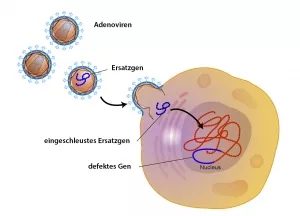
The doctors take her blood. They extract the few white blood cells she has left. They use a modified virus as a delivery vehicle to insert a functional ADA gene into those cells’ DNA. Then they infuse them back into her body.
It works.
Her white blood cell count rises. Her immune system stabilizes. For the first time, a genetic disease wasn’t just managed. It was treated at the source.
But this was a single case. A proof of concept built on extreme caution. It didn’t mean the technology was safe for everyone. It just meant it was possible. The real test was still years away. And it would be bloody.
The Cost of Early Hopes: When Gene Therapy Goes Wrong
The initial euphoria of early gene therapy success didn’t last long.
Ashanti De Silva’s case, once hailed as a milestone, showed the fragility of the approach. Years after treatment, the therapeutic effect faded. The engineered gene change simply vanished from her cells.
Then came the darker side.
Other children treated for the same immune deficiency developed leukemia several years post-therapy. The repair genes had inserted themselves into wrong spots in the genome, disrupting normal cellular function. These weren’t isolated incidents. They were warnings.
Jesse Gelsinger paid the ultimate price.
In 1999, the 18-year-old enrolled in a trial using adenoviruses as delivery vehicles (“gene taxis”) for a metabolic disorder. The plan was straightforward: inject the virus carrying repair genes directly into his liver.
It backfired catastrophically.
His immune system reacted violently to the viral flood. High fever, severe inflammation, and multi-organ failure followed. Four days after the infusion, Gelsinger died. He remains the first officially recognized victim of gene therapy.
These tragedies highlighted a fundamental problem: getting replacement genes into human DNA safely and precisely is incredibly difficult.
Why Delivery Systems Failed
The setbacks stalled progress.
Researchers scrambled to find better viral vectors. The search continued without success. No sufficiently safe method emerged.
Development stagnated. The field needed a new approach.
The lesson was clear. Biology doesn’t tolerate guesswork.
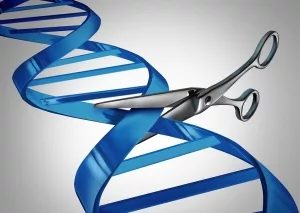
CRISPR/Cas9: Die Genschere, die die Genetik verändert
Die Ära der ungenauen Genbearbeitung ist vorbei. CRISPR/Cas9 hat den Feldern Genetik und Genmedizin neue, präzise Werkzeuge an die Hand gegeben. Dieses System, das sich Biologen von Bakterien abgeschaut haben, ermöglicht es, Mutationen und Gendefekte im menschlichen Erbgut mit einer Genauigkeit auszuschneiden und zu ersetzen, die vorher nicht möglich war.
Der Mechanismus ist elegant. Ein Teil des CRISPR-Moleküls fungiert als Suchhilfe. Es trägt die Sequenz, die im DNA-Strang gesucht wird. Sobald es auf das Gegenstück trifft, dockt die Genschere an. Sie schneidet genau an dieser Stelle. Der Anteil der Fehlplatzierungen sinkt dadurch dramatisch im Vergleich zu älteren Methoden.
Die Ergebnisse in der Praxis sind bereits beeindruckend. Wissenschaftler nutzten die Technologie, um Mäuse von der erblichen Muskeldystrophie Duchenne zu heilen. In menschlichen Zellen gelang die Korrektur einer Alzheimer-Mutation. Auch der Gendefekt der Sichelzellenanämie wurde repariert.
„Dieses genetische Werkzeug hat eine enorme Macht, die uns alle beeinflussen wird.“
— Claes Gustafsson, Vorsitzender des Nobel-Komitees für Chemie, 2020
Kritische Risiken der Keimbahn-Editierung
Trotz des medizinischen Potenzials bleiben ethische Fragen bestehen. In China wurden kürzlich zwei kleine Mädchen geboren. Ihr Erbgut wurde vor der Geburt einer Art Gentherapie unterzogen. Forscher schleusten ein Gen ein, das vor HIV schützen soll.
Die Veränderung geschah im Embryonalstadium. Das bedeutet, dass alle Zellen der Mädchen das neue Gen tragen. Einschließlich der Keimzellen.
Das ist der Kern des Problems. Solche frühen Eingriffe sind hochumstritten. Sie verändern nicht nur den Träger. Die Genveränderungen werden an alle Nachkommen vererbt. Ein Fehler oder Spätfolgen würden also alle Folgegenerationen betreffen.
In Deutschland und vielen anderen Ländern ist eine solche Keimbahn-Therapie verboten. Die Frage bleibt offen, ob sich diese Regelung ändert. Welche Fortschritte die Gentherapie in den nächsten Jahren erzielt, muss sich erst zeigen.