



Protein. Fiber. Your body screams for both.
It’s not complicated. Protein repairs tissue, builds muscle, and keeps your immune system from collapsing. Fiber? It manages blood sugar, lowers cholesterol, and keeps digestion moving without the crash. Most people eat one and neglect the other. That’s a mistake.
Many foods deliver both. Here is a breakdown of six powerhouse options that combine these nutrients naturally, based on standard dietary guidelines.
1. Lentils
Serving Size: 1/2 cup cooked
Protein: 8.9g
Fiber: 7.8g
Lentils are dense. They pack protein, fiber, folate, potassium, and iron into every spoonful. But the real win is the digestion profile.
Lentils offer slow-digesting carbs with a low glycemic index. This means they raise blood sugar gradually, not sharply. High-sugar foods spike your glucose; lentils do not. Research also links lentil-heavy diets to lower cholesterol levels. They are cheap, shelf-stable, and effective.
2. Soybeans
Serving Size: 1/2 cup cooked
Protein: 15.6g
Fiber: 5.1g
Soybeans dominate the bean world when it comes to protein content. They contain almost double the protein of most other legumes.
Beyond protein, they provide iron, magnesium, selenium, and B vitamins. Other beans like black beans, chickpeas, or lima beans offer about 6 to 8 grams of protein and 5 to 8 grams of fiber per half-cup. Good? Yes. Soybeans? Better.
The Amino Acid Gap
Most plant proteins are incomplete. They miss one or more essential amino acids—the building blocks your body uses for protein synthesis. This is why nutritionists often talk about “complementary proteins.”
The solution is simple. Combine legumes with whole grains.
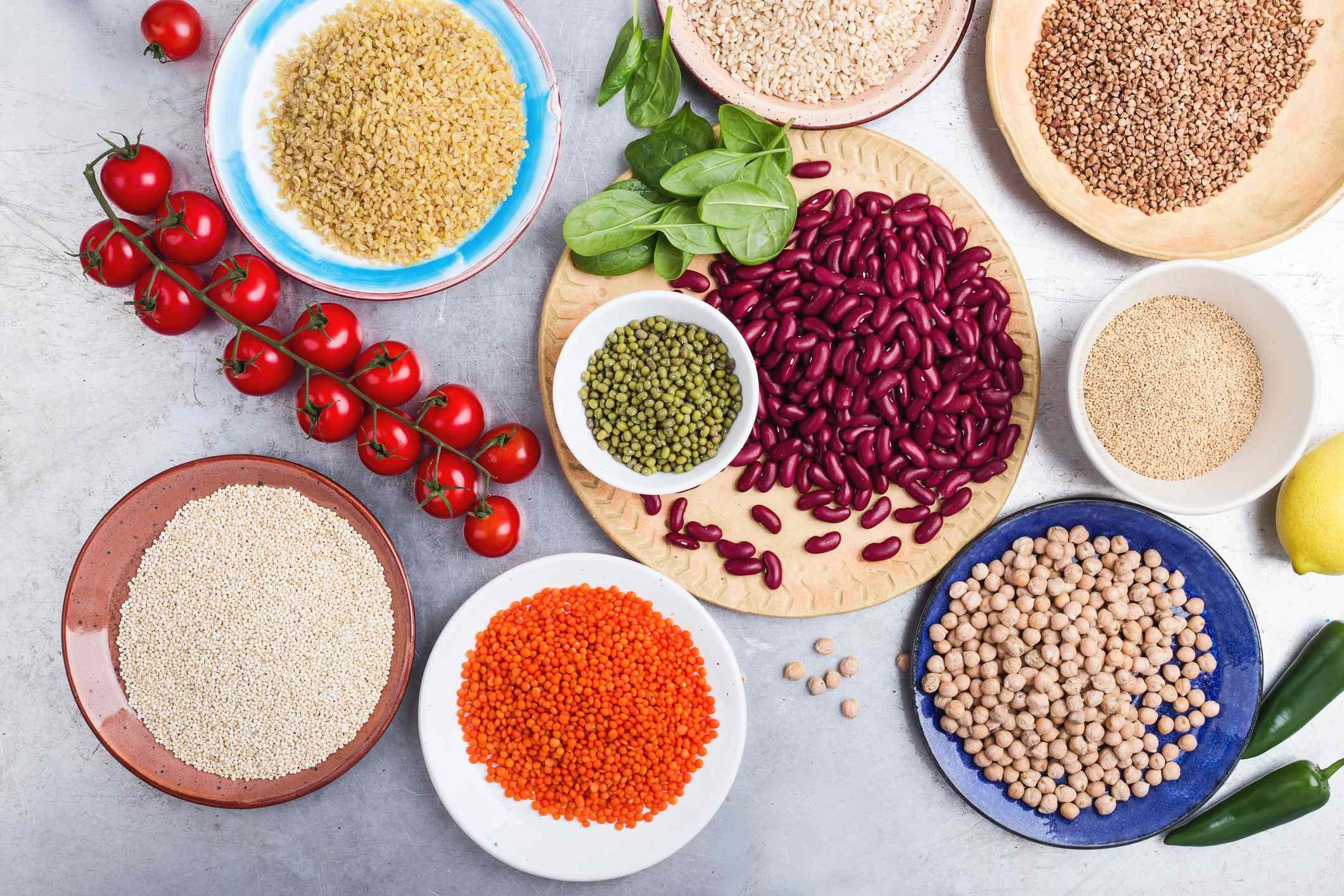
Lentils plus brown rice. Soybeans plus quinoa. Together, they provide all essential amino acids in the optimal amounts. Your body needs the complete set to function correctly. Pairing them fixes the gap.
3. Whole Grains
Grains are not just empty calories. Whole grains contain fiber and protein. The balance varies by type.
Some grains prioritize protein. Others prioritize fiber.
Quinoa and amaranth are the outliers. They are among the highest-protein grains. Crucially, they also contain all essential amino acids, including lysine, which is often missing in other grains like barley or bulgur. Barley and bulgur are excellent for fiber, but you’ll need a protein source elsewhere in that specific meal.
Daily Requirements
What are the actual numbers?
Standard guidelines suggest at least 0.8 grams of protein per kilogram of body weight. For fiber, aim for 22 to 34 grams per day, depending on sex, age, and activity level.
These aren’t arbitrary targets. They are functional baselines for maintaining health.
The Bottom Line
You don’t need supplements. You don’t need fancy powders. You need lentils. Soybeans. Whole grains.
These foods offer more than just macros. They deliver potassium, magnesium, iron, and B vitamins alongside the protein and fiber your body craves.
The next time you eat, ask yourself if your meal has both. If it only has protein, check the fiber. If it only has fiber, check the protein.
Ideally, you should have both. It’s harder to build a body on one nutrient alone.