



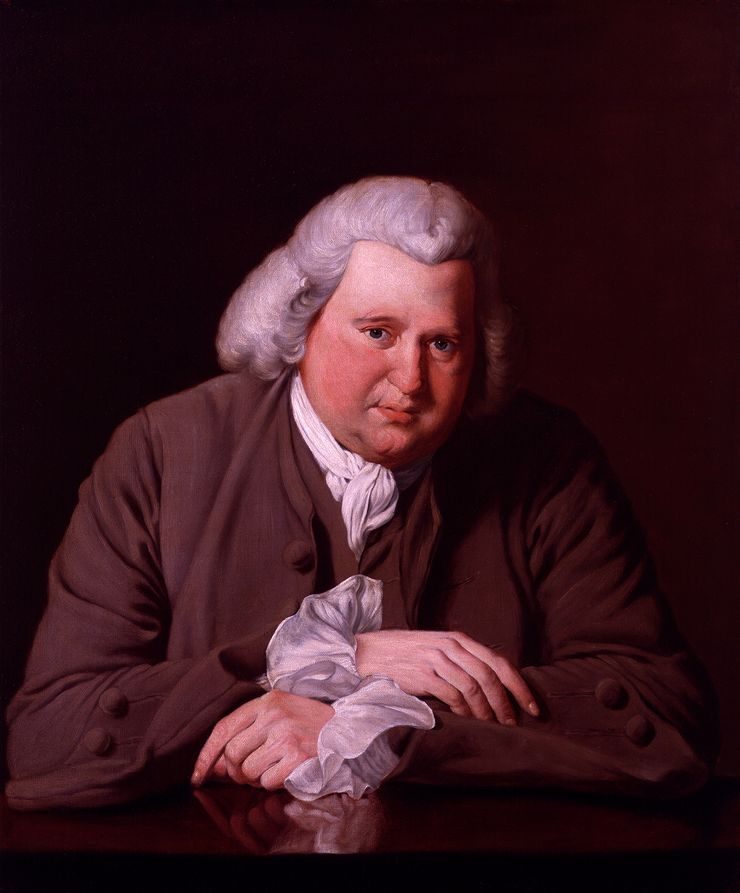
Erasmus Darwin was not only a man of science; he was a provocateur in a wig. Born in December 1731 at Elston Hall, Nottinghamshire, England, he lived a life that defied the strict norms of the 18th century. He died at Derby in April 1802, leaving a legacy that was as literary as it was biological.
He was a doctor, poet and botanist. But perhaps more importantly, he was Charles Darwin’s grandfather. The younger Darwin’s theory of natural selection did not arise in a vacuum. It stood on the shoulders of an older, louder and more radical thinker who lived almost a century earlier.
Writing science in verse
Darwin was a free thinker. He operated in the peripheral areas at a time when religious orthodoxy had a strong influence. He was a radical who found standard prose often too heavy for his complex ideas. So he turned to poetry.
He wrote reports and scientific treatises in verse form. This wasn’t a trick. It was a strategic decision. Rhyme and meter made his radical ideas more digestible and memorable. It allowed him to bring controversial ideas to a wider audience than dry medical journals ever could.
Zoonomia and the laws of organic life
His magnum opus *Zoonomia; or “The Laws of Organic Life” was published in 1794-1796. The work was ambitious. The purpose was to explain the laws that govern all living things.
On these pages, Darwin developed the theory of evolution. It was strikingly similar to ideas later proposed by Jean-Baptiste Lamarck. Erasmus suggested that the species themselves change. They did this by consciously adapting to their environment. The key word here is intentional. He believed that organisms had an intrinsic desire to change. This was a bold departure from the static view of nature prevailing at the time.
Success, scorn and lasting impact
The book was initially a great success. People were fascinated by the combination of science, poetry and philosophy. But the novelty wore off. His unorthodox views on evolution—particularly the idea of intentional adaptation—alienated many of his contemporaries. His work fell out of favor. Critics saw him as a speculative dreamer rather than a rigorous scientist.
Nevertheless, the extent of his influence was far-reaching. He influenced his colleagues. He influenced his followers. His grandson Charles probably read Zoonomia. The younger Darwin refined the mechanism, replacing “deliberate adaptation” with natural selection, but the core insight remained: life changes over time.
Even today, he is an important person of historical interest. Not because he got all the details right, but because he dared to ask the right questions. He brought together the connections between botany, medicine and the origin of life in a way that was decades ahead of his time.
The story of evolution is often told in a straight line from Darwin to the present day. It’s messier. It winds through the poetry of a Derby doctor who saw the future in the form of living beings. He was wrong about how the change happened. But he was right that change did actually happen. This distinction is important.