

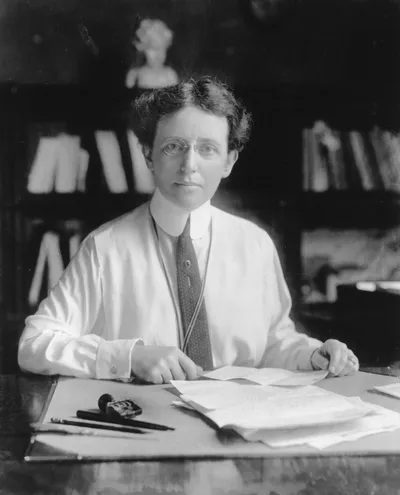
Sara Josephine Baker didn’t just treat sick kids. She built the system that saved them.
Born in Poughkeepsie, N.Y., in 1873, Baker faced a financial wall early on. Her father died before she could afford Vassar, so she pivoted to medicine. After a year of private study, she entered the Women’s Medical College of the New York Infirmary. She graduated in 1898, interned at the New England Hospital for Women and Children, and started private practice in New York City.
But her real work began in 1901.
From Typhoid Mary to Child Hygiene
Baker joined the city health department as a medical inspector. By 1907, she was assistant to the commissioner of health. In that role, she helped catch “Typhoid Mary” Mallon. Famous, certainly. But Baker saw something bigger.
The existing program focused on catching infectious diseases after they happened. Baker wanted to stop them before birth.
She tested her plan in the summer of 1908 in a slum district on the East Side. She sent a team of 30 nurses into the neighborhood. Their job? Find every infant. Teach mothers basic hygiene: ventilation, bathing, light clothing, breast-feeding. Then, follow up.
The results were stark. By the end of that summer, the district recorded 1,200 fewer infant deaths than the previous year.
Building the First Government Child Health Agency
The city took notice. In August 1908, they created the Division of Child Hygiene. Baker became its director.
This was the first government agency in the world dedicated solely to child health.
Under Baker, the division expanded rapidly. It wasn’t just about one neighborhood anymore. The program included:
- Strict examination and licensing of midwives
- Free midwife instruction at Bellevue Hospital starting in 1911
- Appointment of school nurses and doctors
- Compulsory silver nitrate eye drops for all newborns to prevent gonorrhea
- School inspections for infectious diseases
- Health information distribution to low-income families
Working mothers faced a specific problem: no one to watch the baby while they worked. Baker organized “Little Mothers’ Leagues” to train young girls in infant care.
The Numbers Behind the Impact
The data tells the story. In 1908, New York City’s infant mortality rate was 144 deaths per 1,000 live births.
By 1918, it had dropped to 88.
By 1923, it fell to 66.
Those aren’t minor dips. That is a massive reduction in loss.
By the early 1920s, Baker’s health stations were caring for about 60,000 babies a year. That was half of all children born in the city.
Baker didn’t stop there. She lectured on child hygiene at the New York University-Bellevue Hospital Medical School from 1916 to 1930. In 1917, she became the first woman to earn a doctorate in public health from that institution.
She also served as a staff consultant to the federal Children’s Bureau for 16 years, starting in 1912. After retiring from her city bureau in 1923, she stayed involved as a consultant and even represented child health issues to the League of Nations.
Why Her Work Still Matters
Baker proved that public health isn’t just about hospitals. It’s about prevention. It’s about teaching mothers, regulating midwives, and inspecting schools.
She wrote about this work in several books, including Healthy Babies, Healthy Children, and Healthy Mothers, all published in 1920. Her autobiography, Fighting for Life, came out in 1939.
Her legacy isn’t just a name in a history book. It’s the structural framework for how modern cities approach pediatric health. The drop in mortality wasn’t luck. It was a system. And Baker built it.