




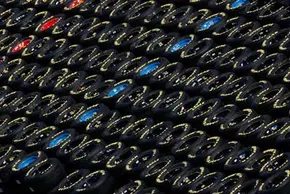
Goodyear doesn’t just make tires for NASCAR. They engineer them. The partnership involves three series and a rigorous testing protocol that starts long before the green flag drops. Goodyear picks specific drivers from all four manufacturers. They choose tracks that yield the best data. These drivers show up with their own cars and teams. They run lap after lap. Engineers record tire temperatures. They log everything. Back at the manufacturing plant, chemists analyze the data. They determine the right compound for the next batch of rubber. A compound is a chemical mix of rubber and polymers. It provides strength. It ensures durability. Most importantly, it offers grip.
The Science of Grip: Bristol vs. Las Vegas
Not all tracks are created equal. Goodyear’s engineers in Akron, Ohio, match tires to the asphalt. Each racing surface is unique. Bristol Motor Speedway in Tennessee is rough concrete. Tires need exceptional grip there. Las Vegas Motor Speedway is smooth asphalt. The same tire fails on the strip. Engineers hunt for the perfect combination. They build competitive tires for specific venues. It is a balancing act between speed and longevity.
The 2006 Shift: From Sales to Leasing
Before 2006, the system was broken. Teams bought tires from Goodyear at every race. Well-funded outfits like Hendrick Motorsports, Rousch-Fenway Racing, and Joe Gibbs Racing bought more than they needed. They used the surplus for private testing. Big teams gained an unfair advantage. NASCAR officials saw the disparity. So, in 2006, they changed the rules. Goodyear now leases tires to every team during race weekends.
The tires come back. They get recycled. To track this inventory, Goodyear implants small RFID chips in every tire. Radio frequency identification allows NASCAR to monitor usage. Beyond race weekends, Goodyear leases 200 tires to Sprint Cup teams. They provide 160 for the Nationwide Series. They supply 120 for the Craftsman Truck Series. These are for non-sanctioned tracks. The RFID chips ensure no unauthorized testing slips through.
Testing is Now a Premium Asset
Historically, some teams viewed tire testing as a nuisance. Now, it is a hot commodity. NASCAR limits the number of tests. The goal is to equalize competition and lower costs. Testing is at a premium. Teams value every lap. You can see how critical this process is. But drivers want to race. Fans want to see limits pushed. The next step is race day preparation.
The Indianapolis Incident of 2008
Tire failure can derail a race. During the 2008 Allstate 400 at Indianapolis Motor Speedway, improper tire wear caused chaos. NASCAR threw competition caution flags repeatedly. Cars could not run 18 green flag laps without pitting. It was a mess. Goodyear responded with large-scale tire tests in fall 2008 and spring 2009. The incident sparked debate. Should NASCAR have an in-house tire testing team? Currently, Goodyear relies on selected teams and a handful of tracks. An in-house team would allow faster development for specific venues.
The 2008 Allstate 400 changed everything. It reshaped how tires are tested. It changed how they are developed. The sport moved forward. The tires followed.