
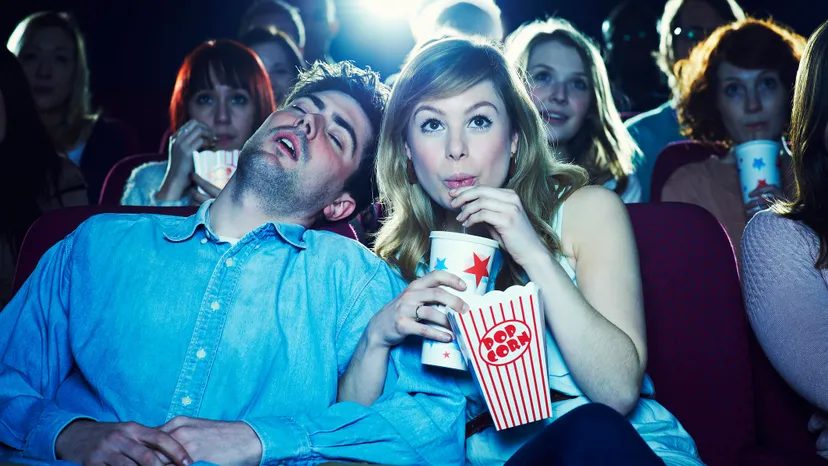
It is a bizarre phenomenon. You pay fifteen dollars for a ticket. You sit in a seat that costs more than your first car. The plot involves explosions, gunfights, and loud soundtracks. And yet, your eyelids droop.
Why does a healthy adult drift off during an action movie? Is it just the darkness? The plush velvet? Yes, those things help. But they aren’t the whole story. To understand why you nodded off in the middle of an afternoon showing, we need to look at something called “somnificity.”
The Science of Sleepiness
Murray Johns, an Australian sleep doctor, invented the Epworth Sleepiness Scale (ESS). It is the global standard for measuring how likely you are to doze off. He asked thousands of people to rate their chances of falling asleep during eight daily activities.
The results were revealing. Johns collected data from over 2,800 adults across seven countries. He ranked activities by their “somnificity,” or sleep-inducing power.
Here is how the activities stack up:
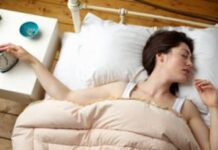
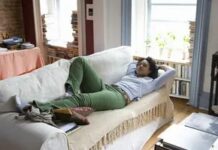
- Lying down to rest in the afternoon: No. 1. Obviously.
- Watching TV: No. 2.
- Sitting and reading: No. 3.
- Driving a car: No. 4.
- Sitting quietly in a public place: No. 5.
- Sitting in a movie theater: No. 6.
Movie theaters don’t even make the top three. The score for sitting inactive in a public place is less than half that of watching TV. But it is still twice as likely to make you sleep as talking with someone.
“A situation with high somnificity is one where you’re not moving much. You might be sitting, but you won’t be standing, and you won’t be moving your head and neck in particular.”
The Posture Connection
Posture matters. Johns concluded that when you stand, your muscles and joints work to maintain balance. This activity contributes to what he calls the “secondary wake drive.”
When you sit still, or lie down, you stop moving. Your head and neck muscles relax. This sends a signal to the brain to reduce that secondary wake drive.
Your brain has two systems fighting for control. One is the sleep drive. The other is the wake drive. They are mutually inhibitory. Think of them as a yin-and-yang relationship. When one goes up, the other goes down. Whichever is dominant decides if you are awake or unconscious.
The primary wake drive is hardwired by your circadian rhythm. Your internal biological clock keeps you alert for about sixteen hours. That is why jet lag feels like a wreck. Your clock is out of sync.
But posture affects the secondary wake drive. When you close your eyes and stop moving, you remove the physical stimulus that keeps you alert. The brain takes the hint. It cuts the wake drive. Sleep takes over.
Why TV Beats Movies
If movie theaters are only the sixth most sleep-inducing activity, why do people fall asleep there?
Watching TV is often a wind-down activity. Adults watch it at the end of a long day. The primary wake drive is already fading. The secondary wake drive is low because you are sitting. Add in the likelihood of lying down, and you have a recipe for sleep.
Going to the movies is different. It is supposed to be exciting. You are not lying down. You are surrounded by a crowd. Yet, you still drift off.
The answer is subtle. You are sitting. Your neck is relaxed. The screen is a steady, unchanging light. Your body doesn’t have to work. The secondary wake drive drops below the threshold. The sleep drive, even if weak, tips the scale.
When It’s Not Just Tiredness
If you fall asleep during a loud, chaotic film, that is different.
Philip Gehrman, a sleep scientist at the University of Pennsylvania, uses the Epworth Sleepiness Scale in his practice. His view is simple. If you are well-rested, you should be able to stay awake during sedentary activities.
Falling asleep in the movies can signal a sleep deficit. This deficit might be from simple overtiredness. Or it might be a disorder.
Most adults need seven to nine hours of sleep. Many get less. That creates a baseline deficit. But serious conditions like sleep apnea disrupt rest profoundly. Gehrman notes that older adults are more likely to doze off in theaters. Age brings a higher risk of sleep disorders.
If you start snoring ten minutes into an action flick, take notice. It might just be exhaustion. It might be time to see a doctor.
The Ultimate Sleep Aid
There is one exception to the rule. A British play called “Lullaby” premiered in 2011. The goal was different. The audience wore pajamas. They were given beds to lie on. The play was designed to put them to sleep.
It worked. But for the rest of us, stuck in a hard plastic seat with a bag of popcorn, the struggle is real. The darkness helps. The stillness helps. But the real enemy is the quiet reduction of your own wakefulness. You are not broken. You are just human. And your body is efficient enough to shut down the moment you stop moving.
“When you sit down, or perhaps more relevantly, when you lie down and close your eyes and stop moving, you reduce this secondary wake drive and that induces sleep.”